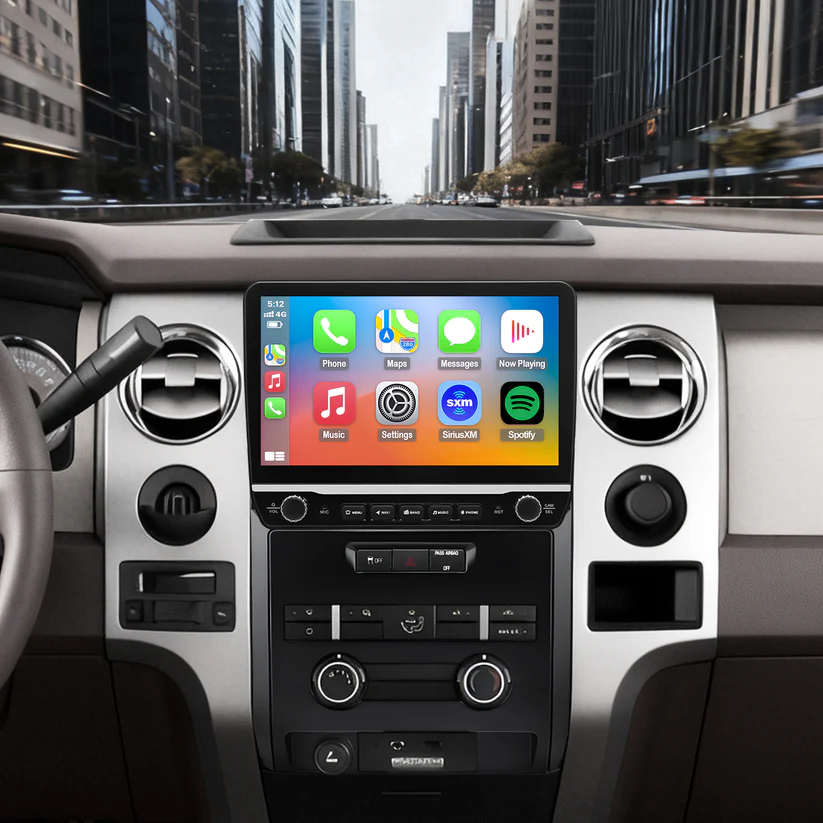
The Ford F150 from the 2009–2012 era remains one of the most respected trucks on the road today, known for its sheer towing capacity and mechanical resilience. However, while the engine and chassis are built to last for decades, the cabin technology from that period has unfortunately not aged with the same grace. Many owners find themselves staring at a pixelated, monochrome display or struggling with a basic CD player that lacks any modern smartphone integration. This has led to a massive surge in demand for a 2012 Ford F150 radio upgrade. One of the most common questions from truck owners, however, is whether replacing the factory system requires a high degree of professional knowledge or if it is a task that can be handled in a home garage.
Modernizing your truck’s interior involves more than just swapping out a head unit; it is about bringing 2026-level connectivity to a classic dashboard. Traditionally, automotive electrical work was a daunting task involving wire strippers, soldering irons, and complex wiring diagrams. Fortunately, the evolution of vehicle-specific hardware has changed the landscape for the average enthusiast.
The Technical Reality of Installing a 2012 F150 aftermarket radio
The short answer to the question of professional knowledge is that it depends entirely on the design of the hardware you choose. Many generic universal units still require significant manual wiring and dashboard modification, which would indeed necessitate professional expertise. However, a specialized 2012 F150 aftermarket radio from a professional manufacturer is designed with a “Plug and Play” philosophy. This means that the unit is engineered to match the specific physical dimensions and electrical connectors of the Ford dashboard.
Instead of cutting into the factory wiring harness—which can lead to electrical shorts or voided insurance policies—a high-quality upgrade uses custom-molded connectors that snap directly into the original Ford plugs. This design philosophy significantly lowers the barrier to entry. If you can handle a screwdriver and have the patience to remove a few trim panels, you likely have enough technical skill to complete the installation. By focusing on vehicle-specific integration, Topdisplay ensures that the installation process is more akin to assembling a high-tech puzzle than performing complex electrical surgery.
High-Performance Specifications and Visual Fidelity
When selecting an upgrade, the internal hardware is what determines the longevity of the device. A premium 2012 Ford F150 radio in 2026 should be powered by an 8-core CPU. This processing power is non-negotiable for anyone who wants a responsive interface. Older, 4-core systems often struggle with the data-heavy requirements of modern navigation apps or high-definition music streaming, leading to frustrating lag. With an 8-core processor, the system boots up almost instantly and handles multitasking—such as running a GPS map while streaming a podcast—without any stutter.
The display technology is the next critical component. The cabin of a truck like the F150 is often subject to intense sunlight, which can wash out standard LCD screens. Upgrading to a QLED (Quantum Dot LED) display provides a significant advantage. With high contrast ratios and vibrant color reproduction, a QLED screen remains legible even in high-glare environments.
Connectivity Features That Redefine the Driving Experience
The primary motivation for installing a 2012 F150 aftermarket radio is to gain access to modern digital tools. At the top of that list are wireless Apple CarPlay and Android Auto. These features allow your smartphone to sync automatically with the dashboard, bringing your messages, calls, and favorite apps directly to the touch screen. This allows for entirely hands-free operation through voice commands, which is a major safety upgrade for any driver.
Beyond smartphone mirroring, high-end units often include an integrated 4G LTE module. By inserting a SIM card, your truck becomes a standalone smart terminal with its own internet connection. This is particularly useful for professional drivers who need reliable, real-time traffic updates via Google Maps or Waze without relying on their phone’s data plan or battery. Furthermore, the built-in DSP (Digital Signal Processor) allows you to fine-tune the audio output, breathing new life into the truck’s original speakers by providing professional-grade equalization and soundstage adjustments.
Retaining Factory Functionality and OEM Integration
A major concern for Ford owners is the loss of original features like steering wheel controls or the factory backup camera. A professional-grade upgrade includes a CANBUS decoder that bridges the communication gap between the new Android system and the truck’s original computer network. This ensures that when you plug in your new system, your volume and track-skip buttons on the steering wheel continue to work exactly as they did before.
The visual integration is equally impressive. The 10.1-inch vertical screens are designed to sit flush within the existing dash trim, maintaining a clean and professional look. This level of detail is a hallmark of Topdisplay, where the focus is on creating a product that feels like a factory-installed luxury option rather than a clunky aftermarket addition. For the user, this means that even though the technology is cutting-edge, the interior aesthetic of the Ford F150 remains cohesive and functional.
Is DIY Right for You?
While “professional knowledge” is always an asset, the move toward vehicle-specific, plug-and-play hardware has made upgrading a 2012 Ford F150 radio more accessible than ever before. If you prioritize hardware stability, such as 8-core processing and QLED clarity, you are investing in a system that will remain relevant for years to come.
For those who are still hesitant about the installation process, the availability of detailed video guides and dedicated technical support from the manufacturer provides an extra layer of security. Whether you are an enthusiast looking to modernize your personal vehicle or a business owner outfitting a fleet of reliable work trucks, the transition to an Android-based infotainment system is the single most effective way to enhance the safety, utility, and enjoyment of your Ford F150. By choosing a high-spec, well-integrated unit, you ensure that your truck’s cabin finally matches the legendary power under its hood.
