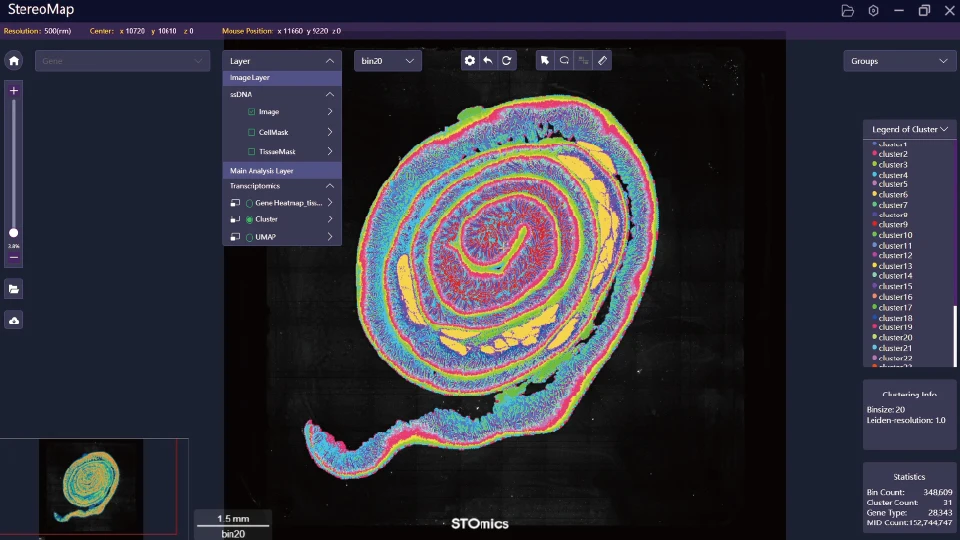
Researchers working with spatial biology face significant hurdles when interpreting complex datasets. The integration of gene and protein expression with precise location data creates an information-rich but challenging environment. This is where a robust spatial omics data analysis pipeline becomes essential. Platforms like STOmics provide dedicated spatial omics software to transform raw data into actionable biological insights.
Managing Immense and Complex Data Volumes
A primary challenge is handling the sheer scale of data generated. Traditional analysis tools often struggle with the multi-dimensional nature of spatial datasets, which combine molecular profiles with precise X-Y coordinates. A dedicated spatial omics data analysis pipeline, such as those developed by STOmics, is engineered for this specific task. It streamlines data processing, reducing computational burdens and ensuring researchers can manage the terabytes of information produced in a single experiment efficiently.
Integrating Multiple Layers of Biological Information
Another problem is the siloed analysis of different data types. Viewing transcriptomic and proteomic data separately misses the crucial interactions that define tissue function. Effective spatial omics software solves this by enabling integrated visualization and analysis. A comprehensive pipeline allows scientists to overlay gene expression maps with protein activity, revealing coordinated cellular behaviors and regulatory networks within their native architectural context.
Translating Data into Clear, Actionable Findings
Finally, the leap from processed data to biological understanding can be difficult. Sophisticated spatial omics data analysis pipeline tools include visualization suites and analytical algorithms that highlight statistically relevant patterns. This capability helps identify novel cell niches, trace developmental gradients, or characterize disease microenvironments with clarity. The software turns abstract data points into clear, visual stories about tissue organization and function.
A functional spatial omics data analysis pipeline addresses core challenges in data handling, multi-omics integration, and scientific interpretation. By providing structured pathways from raw sequencing output to biological discovery, these tools are fundamental for progress in spatial biology. The integrated solutions offered by STOmics exemplify how specialized spatial omics software supports researchers in extracting meaningful answers from the complex spatial landscape of tissues.
