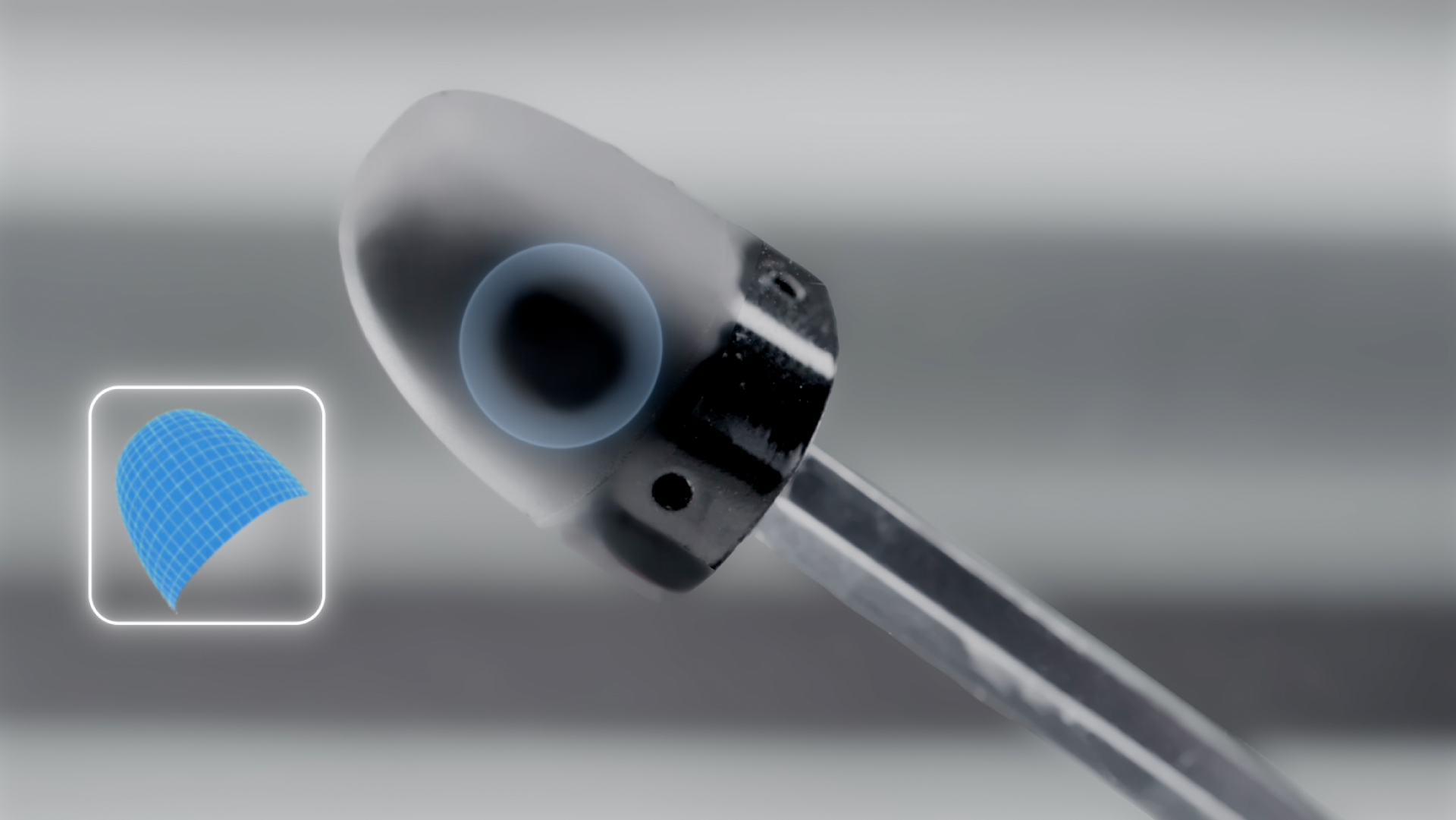
As AI service robots move from controlled labs into dynamic human environments, their ability to safely and intelligently interact with the physical world becomes paramount. Vision and LiDAR provide spatial awareness, but they lack the nuanced physical feedback required for delicate manipulation and safe contact. This is where the robotic tactile sensor becomes a critical component, acting as the robot’s sense of touch. By providing direct data on force, texture, and shape, these sensors enable a new level of dexterity and safety. Companies like Daimon are at the forefront of this sensory innovation, developing sophisticated tactile solutions that allow robots to perceive their interactions with unprecedented detail.
Daimon Robotic Tactile Sensor Applications
The applications for advanced tactile sensing are vast and transformative. In healthcare, robots equipped with a robotic tactile sensor can assist patients by providing stable support, sensing grip force to avoid causing discomfort, or even helping with rehabilitation exercises by monitoring applied pressure. In logistics and manufacturing, such sensors enable robots to handle irregularly shaped, fragile, or deformable items—from packing produce to assembling electronic components—by detecting slip and adjusting grip in real-time. For domestic assistance, a robot can perform tasks like washing dishes, feeling for cleanliness and grip, or sorting objects by material hardness. This direct physical feedback loop is what allows AI to translate its cognitive decisions into safe, effective, and useful physical actions in unstructured settings.
Tactile Sensors for Service Robot Safety
Safety is the non-negotiable foundation for any robot sharing space with people. Proximity sensors can prevent collisions, but tactile sensors manage the inevitable and intentional contacts. They allow a robot to detect an unexpected touch—like a person brushing against it—and immediately halt or retract movement. Furthermore, during assisted tasks like handing over an object or guiding an individual, the sensor provides continuous force feedback, enabling the robot to apply just the right amount of pressure. Daimon’s approach to this critical need is exemplified by their DM-Tac series of tactile sensors. Their compact, fingertip-scale design, such as the 23mm×18mm×18mm FM model, allows for deployment in small spaces on grippers, providing essential data on 3D force and contact topography to make every interaction inherently safer.
Essential Feedback for AI Robot Interaction
True AI-driven interaction requires more than pre-programmed movements; it demands adaptive learning based on sensory input. Tactile sensors provide the rich, high-dimensional data that AI algorithms need to learn about object properties and manipulation outcomes. For instance, by detecting micro-vibrations indicative of slip, a robot can learn the optimal grip for different materials. The ability to identify material hardness or texture allows for more sophisticated object recognition and handling strategies. Sensors like Daimon’s DM-Tac FS, with its slender 40mm×14mm×14mm profile and capabilities for slip detection and hardness identification, generate the precise data streams needed. This transforms a simple gripper into an intelligent perceptual system, enabling robots to learn from every physical interaction and continuously improve their performance in real-world tasks.
Conclusion
Tactile sensors are not merely an add-on but an essential sensory modality for AI service robots to operate effectively and safely alongside humans. They close the perception-action loop, providing the critical data needed for dexterous manipulation, safe physical contact, and intelligent, adaptive learning. As the technology advances, the sophistication of a robot’s sense of touch will directly correlate with its usefulness and acceptance in daily life. For organizations looking to integrate this essential capability into their robotic solutions, exploring the advanced sensory technologies developed by innovators like Daimon is a logical step toward building more competent and trustworthy AI-powered robots.
