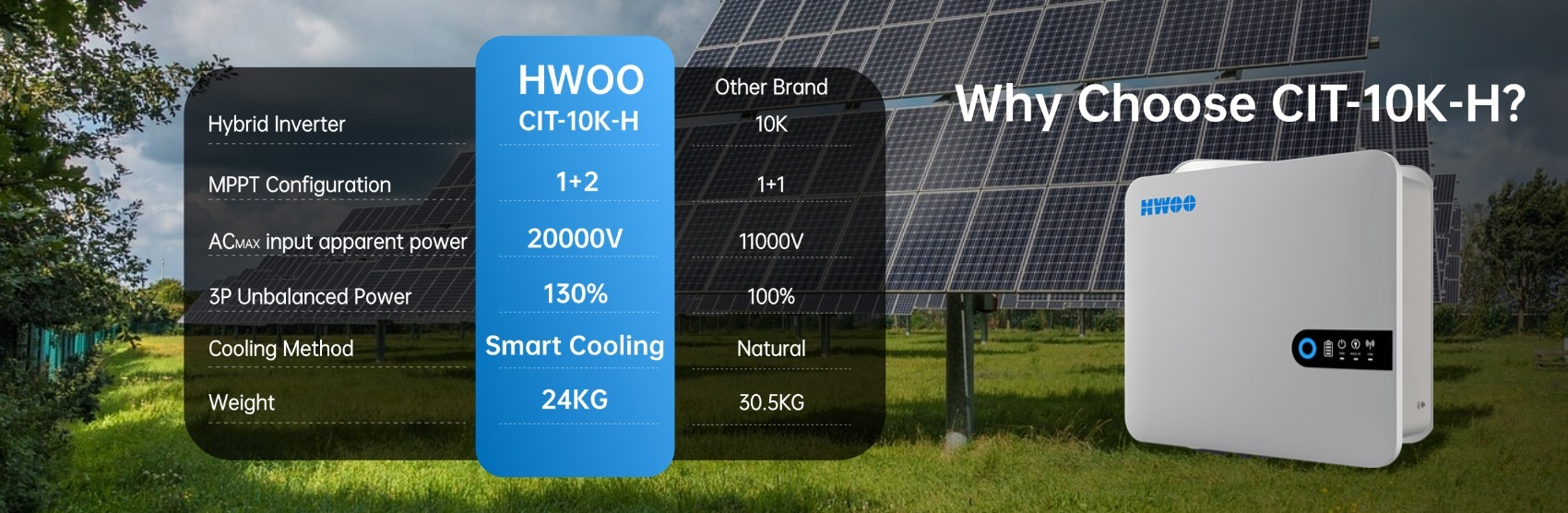
Hybrid inverters are becoming increasingly popular in solar energy systems due to their ability to combine power generation and energy storage into a single, efficient unit. These devices, like the CIT series by HWOO, allow clients to optimize their energy consumption by providing reliable performance across a variety of environments. One question that often arises is whether a separate solar charge controller is needed in systems equipped with a hybrid inverter.
Understanding the Role of Hybrid Inverters in Solar Systems
Hybrid inverters such as the HWOO CIT-5/6/8/10/12K-H offer versatile energy management capabilities, suitable for both residential and commercial applications. These three-phase hybrid inverters enable integration with both solar panels and battery storage, ensuring a constant flow of energy even when sunlight is unavailable. The CIT series incorporates intelligent features like dual-string technology, which maximizes solar panel output and optimizes energy distribution to connected batteries. As a result, hybrid inverters are efficient and scalable, ideal for adapting to varying energy needs.
The Functionality of Solar Charge Controllers
A solar charge controller is designed to regulate the amount of power that flows into the battery storage from the solar panels, ensuring that the batteries are not overcharged or damaged. These controllers are essential for safeguarding the battery life and maintaining the overall health of the energy storage system. While hybrid inverters for solar, like the CIT series, are equipped with built-in charging capabilities, adding a solar charge controller can provide an additional layer of protection and improve the performance of the overall system.
When Is a Solar Charge Controller Necessary with a Hybrid Inverter?
In most cases, hybrid inverters come with integrated charge management features, making them suitable for smaller residential setups. However, in large-scale or commercial installations, where energy loads are higher and more complex, incorporating a solar charge controller can further optimize battery performance and longevity. For the HWOO CIT series, clients may find that adding a charge controller ensures maximum energy efficiency, especially in challenging environments with high solar power demands or multi-orientation shading.
Maximizing Energy Efficiency in Hybrid Inverter Systems
Hybrid inverters like the HWOO CIT-5/6/8/10/12K-H are engineered to deliver the highest level of energy efficiency by balancing energy generation with storage capabilities. These inverters are particularly valuable in settings where reliable energy management is crucial. By combining the advanced features of hybrid inverters with the potential benefits of a solar charge controller, clients can maximize the performance and lifespan of their solar energy systems.
