Building security has moved far beyond simple locks. For property managers and business owners, door access control systems are now essential tools for maintaining both site safety and operational flow. By transitioning from physical keys to electronic credentials, facilities can achieve a level of oversight and flexibility that was previously impossible.
Understanding how these systems function and integrate is key to appreciating their role in contemporary risk management.
The Mechanics of Centralized Entry Management
A door access control system works by replacing traditional mechanical locks with electronic strikes or magnetic locks, controlled by a central “brain” or controller. When a user presents a credential—be it an IC card, a fingerprint, or a facial scan—the system cross-references the data against an encrypted database in milliseconds.
The primary advantage here is the elimination of the “lost key” security breach. In a traditional setup, a lost master key requires re-keying the entire building. With digital door access control systems, a lost card is simply deactivated in the software, rendering it useless instantly. Furthermore, these systems provide a detailed “Audit Trail.” Every entry and exit is logged, allowing administrators to know exactly who was in a specific zone at a specific time, which is invaluable for post-incident investigations and compliance.
Enhancing Security Through Multi-Factor Authentication
As security threats become more sophisticated, the “popular science” behind access control has shifted toward multi-factor authentication (MFA). Modern systems often combine “something you have” (an RFID card) with “something you are” (biometric data). This prevents unauthorized entry via stolen credentials.
Advanced controllers now utilize Wiegand or RS485 protocols to communicate between readers and the main board. These protocols ensure that even if a reader is tampered with from the outside, the signal to “unlock” cannot be easily spoofed, as the critical decision-making hardware is located safely on the secure side of the door.
Trudian: Intelligent Hardware for High-Traffic Environments
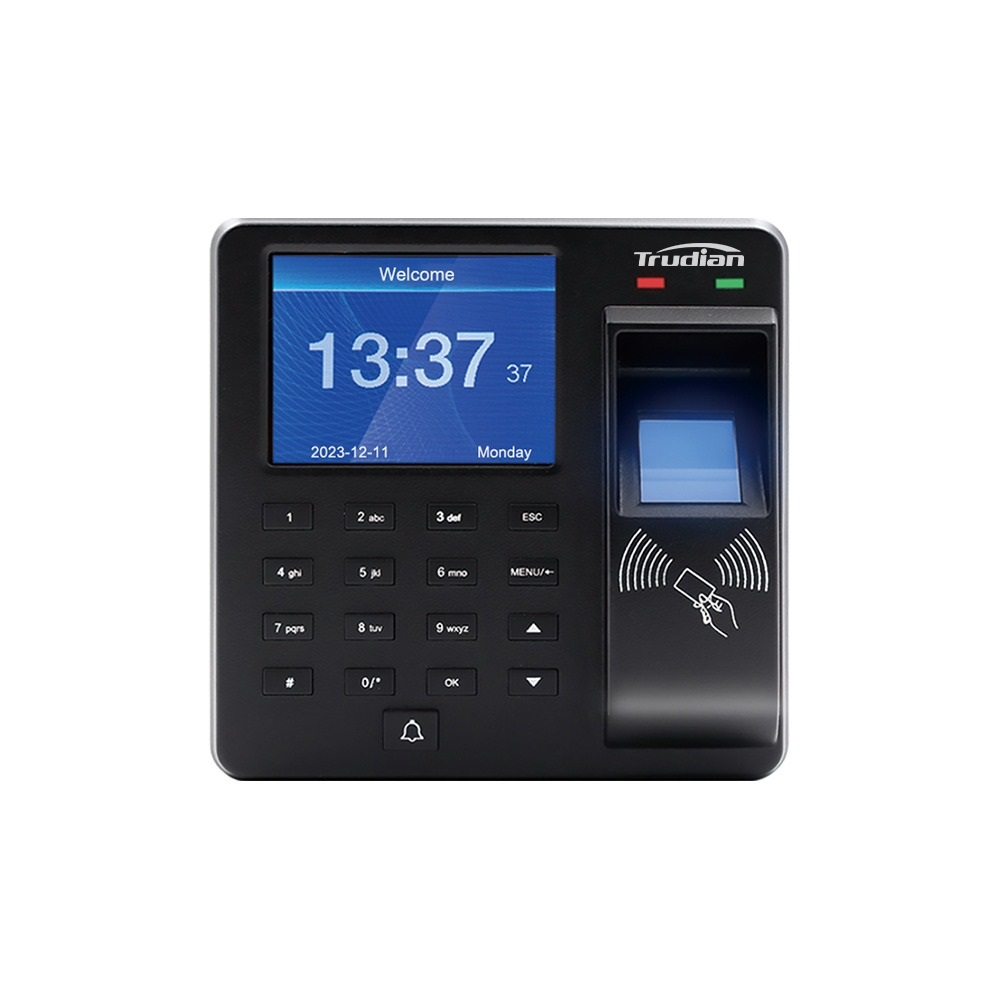
When it comes to manufacturing reliable entry solutions, Trudian stands out by focusing on the intersection of durability and smart technology. Their access control products are engineered to handle the high-frequency demands of commercial offices and large residential communities.
The Trudian access control series features high-precision specifications and can meet the scalability requirements of the 2B industry, such as a large user capacity. The Trudian controller can store 2,000 fingerprints, 1,000 cards, 1,000 passwords, and store 100,000 offline event records, ensuring that buildings remain secure even in the event of network outages.
Transforming Security into Operational Intelligence
For businesses, the ROI of door access control systems goes beyond mere locking. These systems can be integrated with time and attendance software, automatically generating payroll reports based on employee “clock-in” times at the door. They can also manage elevator linkages, ensuring that a visitor can only reach the specific floor where their host is located.
Effective access management does more than just block unauthorized entry; it streamlines how the right people move through a building. By utilizing Trudian’s advanced controllers, facilities can achieve a level of security that is both transparent and highly adaptive.
