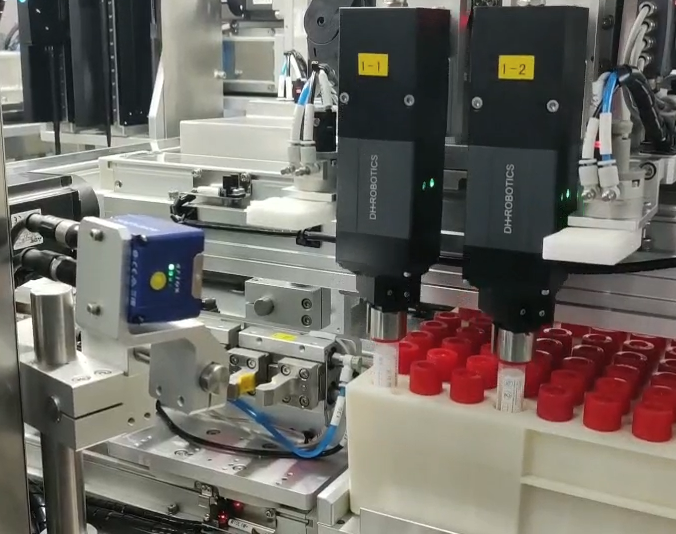
The rise of automation and robotics has transformed the manufacturing landscape, necessitating innovative solutions that streamline processes while enhancing performance and reliability. One such advancement is the electric rotary gripper, a pivotal component in modern robotic systems. Engineered for precision handling, the rotating gripper offers several advantages that boost productivity and minimize operational costs. This article delves into the top applications of electric rotary grippers, spotlighting their impact across the industry.
Precision Assembly Lines
Electric rotary grippers have become indispensable in precision assembly lines, where accurate and reliable product handling is paramount. These rotating grippers ensure high repeatability, which is crucial for tasks that require exact positioning and delicate manipulation. With features like zero backlash, they allow for consistent torque application, which is vital for assembling components in sectors such as electronics and automotive manufacturing.
In a typical assembly line, the electric rotary gripper can effectively manage the gripping and rotating of parts, thereby reducing cycle times and enhancing workflow efficiency. By integrating seamlessly with robotic arms, these grippers provide the flexibility needed to handle various shapes and sizes, adapting to multiple tasks without requiring extensive reconfiguration.
Material Handling and Logistics
Another significant application of the electric rotary gripper lies in the realm of material handling and logistics. Automation in warehouses and distribution centers is increasingly reliant on robots equipped with rotating grippers that efficiently move items across expansive facilities. The stability and speed of electric rotary grippers enable them to operate swiftly, thereby reducing bottlenecks in the supply chain.
Equipped with integrated structures and power-off protection features, electric rotary grippers ensure safe and effective handling of goods, even during unforeseen power failures. This capability not only enhances operational reliability but also boosts worker safety, as automated systems take over high-risk handling tasks, allowing human operators to focus on more strategic activities.
Quality Control and Inspection
Quality control processes benefit immensely from the application of electric rotary grippers. These grippers are adept at handling delicate components and sophisticated sensors, enabling precise positioning during inspection tasks. Their high repeatability and stability ensure that measurements taken during quality assurance are accurate, thus minimizing the risk of errors.
In industries such as pharmaceuticals and food production, where adherence to stringent quality standards is non-negotiable, the use of rotating grippers aids in maintaining compliance. By integrating electric rotary grippers into inspection systems, manufacturers can enhance their quality control efforts, leading to higher product reliability and customer satisfaction.
A Step Toward Automation Excellence
As the manufacturing sector continues to innovate, the role of electric rotary grippers will only grow. Their ability to provide high-speed, stable operations with zero backlash positions them as a cornerstone of modern robotics. Companies like DH-Robotics exemplify the advancement in this field with their RGD Series Direct Drive Rotary Gripper, known for its integrated structure and exceptional performance. Choosing such advanced solutions can significantly enhance productivity and reliability in your operations, paving the way for a future where automation excellence is the standard.
By leveraging the capabilities of electric rotary grippers, businesses can not only improve efficiency but also establish a competitive edge in a rapidly evolving marketplace.
