A clinical development strategy needs to do more than define a sequence of clinical trials. It should connect the scientific rationale for a product with regulatory expectations, the characteristics of the target population, the existing treatment landscape, and the evidence needed to support the intended indication and label. Building these elements into the strategy early can help sponsors identify evidence gaps before they become obstacles later in development.
For products intended for multiple markets, this task becomes more complex because regulatory expectations may differ between regions. A development program designed with FDA and EMA considerations in mind can provide a more structured basis for decisions about study design, endpoints, patient populations, and regulatory interactions.
What Should a Regulatory-Aligned Clinical Development Strategy Include?
A regulatory-aligned strategy should define what evidence needs to be generated, when it should be generated, and how that evidence will support the proposed development objectives. This starts with the product’s mechanism, target indication, existing nonclinical and clinical evidence, and intended patient population.
The strategy should then map these factors against applicable regulatory requirements, guidance, and agency expectations. This does not mean treating guidance documents as a fixed checklist. FDA and EMA guidance can contain disease-specific, product-specific, and methodological considerations, while innovative products may encounter questions that are not fully addressed by existing documents.
EMA specifically provides scientific advice to help developers determine appropriate tests and studies during medicine development. The agency notes that such advice can address nonclinical, clinical, methodological, and overall development strategy questions.
For the FDA pathway, sponsors can also seek interaction with the agency before IND submission. FDA pre-IND interactions can help sponsors discuss the information needed to support human testing, nonclinical studies, initial clinical development plans, and other questions relevant to an IND submission.
How Can Sponsors Identify Regulatory Gaps Before Clinical Trials?
Regulatory gap analysis should be performed before major study decisions are finalized. The objective is to identify where the current evidence may not adequately address regulatory questions concerning safety, efficacy, population selection, endpoints, or the proposed indication.
A useful approach is to compare three elements: the evidence already available, the requirements or expectations described in relevant guidance, and the evidence that will ultimately be needed for the intended regulatory submission.
The exercise may reveal issues such as an endpoint that requires additional validation, an insufficiently defined target population, missing comparative evidence, or a development plan that does not adequately address a particular safety question.
Early regulatory interaction can help clarify some of these uncertainties. However, regulatory advice should not be interpreted as a guarantee of future approval. EMA explicitly notes that scientific advice concerns how evidence should be generated and does not determine the eventual benefit-risk assessment for marketing authorisation.
Where Does Competitive Differentiation Fit Into the Development Plan?
Competitive analysis should influence clinical strategy without turning the development program into a simple comparison exercise. The relevant question is not only what competing products have achieved, but also what evidence will distinguish the investigational product within its intended treatment setting.
Sponsors may evaluate competitors according to indication, target population, mechanism, dosing schedule, route of administration, clinical endpoints, safety considerations, and stage of development. This information can help identify potential areas for differentiation and determine whether the proposed clinical program addresses a meaningful clinical need.
The competitive landscape can also affect regulatory planning. For example, FDA’s expedited programs for serious conditions include Fast Track, Breakthrough Therapy, Accelerated Approval, and Priority Review, each with different criteria and development implications.
Therefore, a development strategy should assess whether an investigational product may fit a particular regulatory pathway based on its disease area, available evidence, and potential to address an unmet medical need. Such assessment should remain evidence-based rather than assuming eligibility before the relevant criteria are met.
How Can Clinical Development Strategy Support Label Optimisation?
Label optimisation should be considered during development rather than treated solely as a late-stage regulatory writing exercise. The intended label influences the population studied, endpoint selection, dosing strategy, duration of treatment, and types of safety data collected.
For example, if a sponsor intends to pursue a specific patient subgroup or dosing population, the clinical development plan needs to generate evidence that supports that proposed use. Similarly, claims concerning efficacy, limitations of use, or treatment characteristics need to be supported by appropriate clinical evidence.
This is why development planning should work backward from the evidence needed for the intended product profile. FDA’s regulations and development processes include opportunities to discuss later-stage plans and proposed labeling with the agency. For example, FDA describes End-of-Phase 2 meetings as an opportunity to evaluate Phase 3 plans and identify additional information that may be needed to support a marketing application.
A label-oriented perspective can therefore help sponsors avoid designing studies around endpoints or populations that have limited relevance to the eventual regulatory objective.
How Can Tigermed Contribute to Clinical Development Planning?
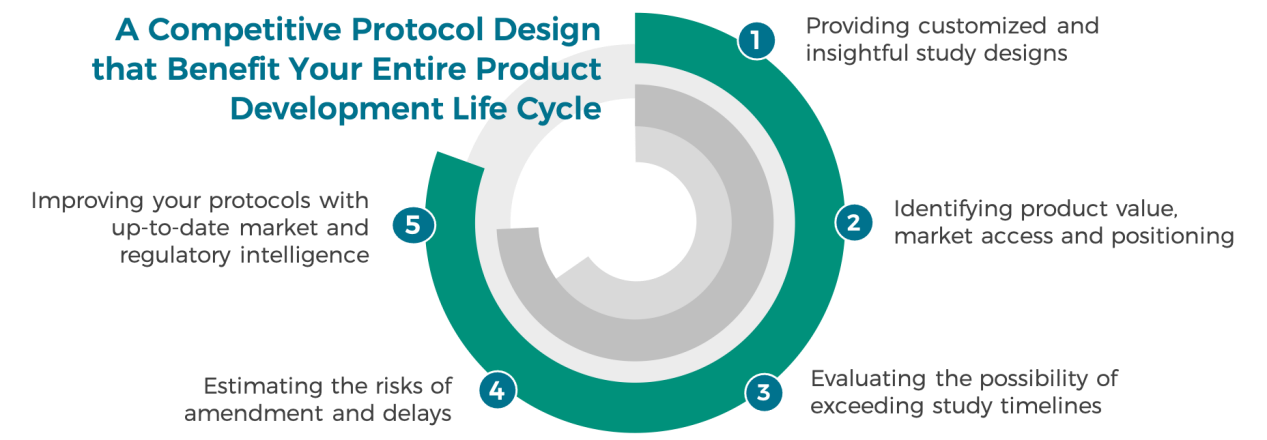
Tigermed provides clinical development services that incorporate medical, operational, and regulatory considerations across the development lifecycle. Its clinical development strategy service focuses on developing individualized clinical development plans and protocol designs based on product characteristics and registration application goals.
For innovative products, Tigermed describes strategy development based on mechanism of action and preclinical data, including considerations such as indication selection, Phase I and Phase II planning, first-in-human dose determination, PK/PD interpretation, later-stage dose selection, and feasibility assessment for accelerated approval.
Its approach also addresses products entering competitive therapeutic areas. For innovative drugs with competitors targeting the same mechanism or target, Tigermed describes evaluating previous study results, market competition, and potential positioning to inform future clinical development plans.
What Should a Strategy Review Before Major Development Decisions?
A practical strategy review should ask whether the proposed studies answer the regulatory questions relevant to the intended indication, whether important evidence gaps have been identified, and whether the clinical program remains consistent with the competitive and treatment landscape.
It should also examine whether regulatory interactions are needed before committing substantial resources to a study. FDA and EMA both provide mechanisms for developers to obtain scientific or regulatory input during development.
Tigermed’s regulatory affairs capabilities include regulatory strategy development, gap analysis, submission preparation, and interactions involving authorities such as the NMPA, FDA, and EMA. This can complement the broader clinical planning process when sponsors are developing products for multiple regulatory markets.
A well-structured clinical development strategy is therefore an evolving framework rather than a static trial schedule. By integrating regulatory expectations, evidence gaps, competitive considerations, and the intended product profile from an early stage, sponsors can make clinical development decisions with a clearer understanding of what evidence each study is expected to generate and how that evidence contributes to the eventual regulatory pathway.
