Every industrial buyer eventually asks the same practical question: what actually makes one embedded IoT platform better than another? The answer lies less in marketing language and more in a specific set of features, and the business benefits those features translate into once hardware is deployed at scale.
Industrial-Grade Reliability as a Core Feature
The first feature that separates industrial-grade embedded IoT hardware from consumer electronics is environmental durability. Equipment installed on a factory floor, in an outdoor cabinet, or on a moving vehicle must tolerate vibration, dust, humidity, and temperature extremes that may exceed the specified operating conditions of consumer-grade devices.
This translates into a direct business benefit: fewer field failures and lower warranty costs. Manufacturers that specify wide-temperature, ruggedized hardware upfront avoid the far more expensive problem of replacing failed units after deployment, when downtime and service visits carry a much higher cost than the initial hardware premium.
Modular Architecture as a Feature That Reduces Development Risk
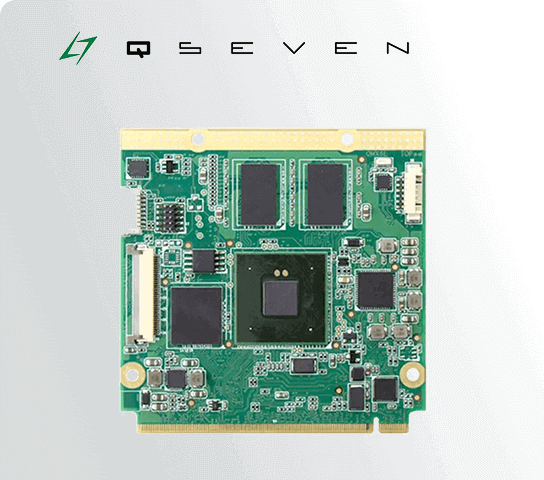
A second defining feature of strong embedded IoT solutions is modular hardware design, where processing modules, carrier boards, and peripheral interfaces are separated rather than fused into a single fixed design. This structure allows a single product platform to support multiple performance tiers without a full redesign for each variant.
The benefit here is measured in engineering hours saved. Product teams can scale from an entry-level configuration to a higher-performance version by swapping a module rather than re-validating an entire board, which shortens development cycles and reduces the risk of costly late-stage design changes.
Protocol and Platform Compatibility as a Feature
Industrial sites rarely standardize on a single communication protocol. A facility may run PLCs on Modbus, vision systems on proprietary interfaces, and cloud dashboards expecting standardized APIs, SoMetimes all at once. Hardware capable of bridging these protocols out of the box is a feature that directly affects integration timelines.
The corresponding benefit is faster deployment with less custom software work. System integrators who choose hardware with broad protocol support spend less time writing translation layers between incompatible systems, freeing engineering resources to focus on the application logic that actually differentiates their product.
Remote Management as a Feature That Lowers Operating Costs
Once devices are deployed across many sites, physically visiting each one for updates or diagnostics becomes impractical. Remote monitoring, over-the-air firmware updates, and centralized device management are features that shift maintenance from a manual, site-by-site task into a controlled, scalable process.
This feature produces one of the clearest financial benefits in industrial IoT: a measurable drop in ongoing operating costs. Businesses that manage large device fleets remotely avoid dispatching technicians for routine maintenance, cutting both labor costs and the downtime that comes with waiting for an on-site visit.
Long-Term Component Availability as a Feature That Protects Investment
A feature that is easy to overlook at purchase time, but critical over a product’s lifespan, is long-term component availability. Industrial equipment often stays in service for a decade or longer, so a platform built on processors with short market lifespans risks forcing an unplanned redesign mid-deployment.
The benefit is investment protection. Businesses that choose platforms with committed multi-year component sourcing avoid the disruption and cost of requalifying hardware simply because an original chipset became unavailable, keeping production stable long after the initial rollout.
How Vantron’s Embedded IoT Solutions Deliver These Features
Vantron brings each of these features together across its embedded IoT solutions portfolio, covering edge intelligent hardware, industrial displays, and IoT communication devices used across manufacturing, digital energy, retail, and healthcare. Its ARM- and x86-based systems are built for the wide-temperature, high-vibration conditions typical of industrial deployment.
Compatibility is addressed directly through devices designed to interface with PLCs, sensors, and other on-site equipment across common industrial protocols, reducing the integration burden for system integrators. Remote management is delivered through Vantron’s BlueSphere cloud platform, including its Gateway Manager and Mobile Device Management tools, allowing monitoring, OTA updates, and lifecycle management from a single dashboard.
The Combined Value of a Well-Chosen Embedded IoT Platform
Taken individually, durability, modularity, compatibility, remote management, and component longevity each solve a distinct engineering problem. Combined, they form the practical foundation of dependable embedded IoT deployment, one where hardware failures are rare, integration is fast, maintenance costs stay predictable, and products remain supportable for years rather than months.
For manufacturers and system integrators evaluating a platform, the real test is not which vendor lists the most impressive specifications, but which one delivers this full set of features consistently across a real deployment. Specifications on a datasheet only tell part of the story; what matters more is how a platform behaves after the pilot phase ends, when hundreds of units are running unattended across different climates, network conditions, and duty cycles.
This is also where many otherwise promising IoT projects begin to falter. A device that performs well in a controlled test environment can still expose weaknesses once it faces inconsistent power quality, intermittent connectivity, or years of continuous operation without scheduled downtime. Features like ruggedized construction, modular scalability, and remote manageability are what prevent these later-stage failures from turning into costly, large-scale service interventions.
Viewed this way, choosing an embedded IoT platform is less a one-time procurement decision and more a long-term partnership between a business and its hardware supplier. The vendor’s ability to sustain component supply, provide timely technical support, and maintain software compatibility over years of deployment often matters as much as the hardware’s original specifications.
That is ultimately what separates a pilot project that scales smoothly into a full production rollout from one that stalls the moment it leaves the lab. It is also the standard Vantron designs its embedded hardware to meet, building platforms intended not just to launch successfully, but to remain dependable, supportable, and cost-effective throughout the full lifespan of the industrial systems they power.
