Commercial facilities rarely use electricity at a constant rate. Production equipment, cooling systems, and building services create changing demand throughout the day. These fluctuations can increase demand charges. Battery storage offers a way to manage when facilities draw power from the grid.
However, peak shaving, load shifting, and backup power solve different problems. Buyers evaluating commercial energy storage solutions should define the intended duty before comparing battery capacities or supplier quotations. Schedules matter as much as hardware.
Peak Shaving Depends on Demand Patterns
Peak shaving reduces the highest grid demand recorded during a billing interval. When facility consumption approaches a chosen threshold, the battery discharges to cover part of the load. This can reduce demand charges. Savings depend on tariffs and discharge timing.
Facilities should examine interval meter data rather than relying on monthly electricity totals. Interval readings reveal whether peaks are brief or prolonged. A short spike may require substantial discharge power but relatively little energy. Sustained peaks need greater stored energy to maintain the reduction.
Storage controls also need a reserve strategy. If a battery discharges fully during an early peak, it cannot respond to another event later that day. Operators can set discharge limits and recharge windows based on expected loads. Test these settings against consumption records.
Load Shifting Moves Energy Between Hours
Load shifting focuses on electricity prices rather than the single highest demand reading. Under time-of-use tariffs, a facility may charge its battery during lower-cost hours and discharge during expensive periods. Price differences must cover losses, battery wear, and operating costs.
Site managers should map hourly energy use alongside tariff periods. Warehouses with evening refrigeration loads may have different requirements from workshops that operate mainly in daylight. Solar generation adds another consideration: surplus daytime electricity can sometimes be stored for later consumption, subject to site configuration and local export arrangements.
Peak shaving and load shifting can work together, but their schedules may conflict. Discharging to reduce a midday peak might leave insufficient energy for evening price management. The control system therefore needs clearly ranked objectives. Compare schedules against historical loads and seasonal changes.
Backup Power Needs a Separate Reserve Plan
Backup operation begins when the normal supply becomes unavailable. Critical circuits may include security systems, network equipment, control devices, and selected refrigeration loads. Battery storage can support these circuits when paired with suitable power conversion, switching, and protection equipment. Capacity alone does not establish backup capability.
Engineers should identify essential loads and calculate their required operating time. Starting currents, continuous consumption, and conversion losses all influence the design. For example, keeping control systems online for two hours is a different task from supporting an entire production line. Transfer arrangements must match interruption tolerance.
A shared battery may serve daily energy management and emergency supply, provided sufficient charge remains available. Reserving energy for outages reduces the capacity available for routine savings. Buyers comparing commercial energy storage solutions should ask how the controller maintains this reserve and what happens if a power failure occurs during a planned discharge period.
Battery Specifications Shape the Design
Battery energy and output power are separate specifications. Kilowatt-hours describe stored energy, while kilowatts describe the rate at which equipment can deliver it. Continuous current ratings also matter because they limit sustained operation. System designers need to check these figures alongside voltage, inverter requirements, and the intended charge and discharge schedule.
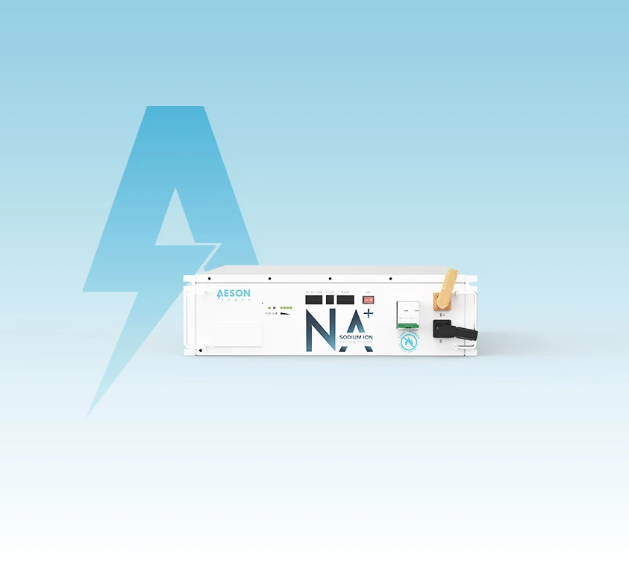
One rack-mounted option is the HaloDyne APSI2500, offered within the ESS range associated with Aeson Power. The module has a nominal voltage of 48.5V, a capacity of 50Ah, and nominal energy of 2.42kWh. Its specified maximum continuous charging and discharging currents are both 50A. These figures provide an initial basis for equipment matching, not a complete system performance rating.
The stated charging cut-off voltage is 61.2V, while the discharging cut-off voltage is 38V. Integrators must verify that the inverter, charging controls, protection settings, and battery configuration suit these limits. Multiple modules may be needed for a commercial load, but allowable connections and overall system capacity require confirmation from the supplier before a design is finalized.
Procurement Should Start With Site Evidence
Before requesting a quotation, buyers should collect interval load data, electricity tariffs, critical-load schedules, and available installation space. They should also describe the desired operating priorities: reducing demand charges, moving consumption into cheaper periods, maintaining backup reserves, or combining these functions. Clear inputs make proposals easier to compare on an equal basis.
Commercial proposals should state usable energy, sustained output, charging limits, and control functions. Procurement teams should request compatibility documents and commissioning requirements.
Payback estimates should reflect local tariffs, operating losses, and measured demand. Buyers should also check warranty terms, maintenance access, and which party is responsible for system integration.
A Practical Path to Project Evaluation
Successful projects start by separating economic objectives from backup requirements. Peak shaving requires demand analysis, load shifting needs tariff scheduling, and emergency operation depends on critical-load planning. Together, these checks help buyers identify commercial energy storage solutions that fit actual site conditions rather than relying on headline battery capacity.
Aeson Power is an Australian battery technology provider with sodium-ion storage products for grid-connected and off-grid applications. They can discuss suitable equipment and configuration needs with commercial buyers. Share your load records, tariff details, and backup requirements to request a technical review of the proposed storage system.
