Electronics manufacturing increasingly demands curing processes that balance speed, energy use, temperature control, and consistent coating performance. Future progress will depend on matching light sources to material chemistry, improving process monitoring, and integrating curing equipment with automated production lines.
While a fusion UV lamp remains useful for applications requiring broad-spectrum ultraviolet exposure, Axxonauto operates in an industry where different curing technologies serve distinct manufacturing needs.
How Are Smarter Light Sources Improving Material Compatibility?
UV curing technology is evolving through improvements in wavelength control, optical design, and energy delivery. These developments allow manufacturers to tailor exposure conditions to specific adhesives, inks, and conformal coatings instead of relying on a single approach across every product.
Traditional mercury and metal halide UV lamps can provide broader spectral output, although their wavelength ranges vary by lamp type. UV LED sources typically emit within narrower, application-specific wavelength bands. The distinction matters because photoinitiators respond to particular wavelengths; a source that does not align with a formulation’s absorption characteristics may produce inadequate curing even under prolonged exposure.
Material development will remain closely connected to equipment innovation. Coating suppliers are formulating products for different curing conditions, while electronics manufacturers must evaluate adhesion, chemical resistance, electrical insulation, and substrate compatibility before introducing a new material into production.
A practical validation step is to run joint trials with both the coating supplier and the curing equipment provider. Testing the actual material under representative line conditions helps confirm that spectral output, irradiance, and conveyor speed work together before a new combination enters routine production.
| Comparison area | UV LED curing systems | Lamp-based curing systems |
| Spectral output | Narrow band: 365 / 395 / 405 nm | Broad spectrum; multiple lamp types |
| Heat exposure | Cold light source; lower thermal load | Higher infrared component; heat management required |
| Start-up behaviour | Instant on/off; no warm-up | Requires warm-up and cool-down |
How Do Energy Efficiency and Thermal Management Shape UV LED Curing?
Reducing energy consumption without compromising coating quality is becoming an important engineering objective. UV LED sources can convert a greater proportion of electrical input into useful radiation within their operating wavelength range, and they generally generate less unwanted infrared radiation than conventional broad-spectrum systems. Actual energy savings depend on the application, operating cycle, and equipment configuration.
The growing use of UV LED curing systems also creates opportunities for more selective thermal management. Since many electronic assemblies contain heat-sensitive plastics, connectors, and soldered components, limiting unnecessary heating can reduce process risks. However, the substrate temperature still requires validation because absorbed UV energy and surrounding equipment can contribute to heat buildup.
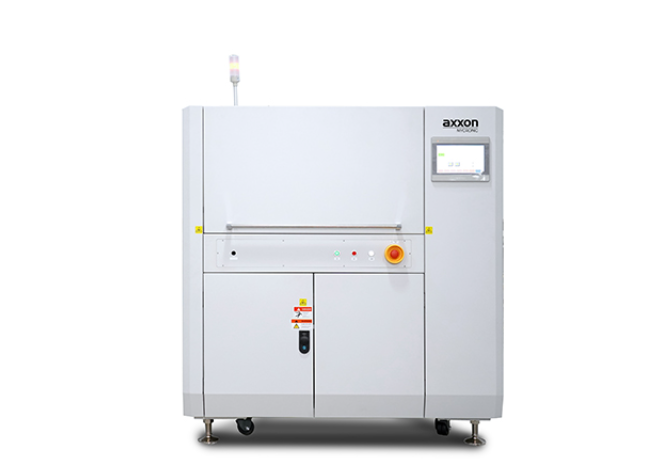
The UV200 inline curing tunnel from Axxonauto provides an example of conventional lamp-based curing technology. It supports UV- or visible-light-sensitive adhesives, inks, and coatings through mercury or metal halide lamp configurations, offering an alternative to UV LED systems for applications requiring different spectral output. Its configurable design supports different process requirements, while the built-in lamp-life monitor helps maintenance teams track lamp operating hours and plan replacement intervals. These features make it a relevant reference point when evaluating how lamp-based systems can complement or substitute for LED curing in specific production scenarios.
How Do Automation, Monitoring, and Process Intelligence Change Curing?
Future curing lines are likely to rely more heavily on process data than on fixed settings alone. Monitoring lamp output, conveyor speed, exposure time, and temperature can help operators identify deviations before they affect large production batches. Historical records also make it easier to compare performance across product changes and maintenance intervals.
Automation can improve consistency by coordinating curing with upstream coating and downstream inspection. Conveyor controls, robotic handling, and synchronized production signals help keep assemblies within defined process windows, particularly when board sizes and production volumes vary. Integration should still allow access for maintenance and accommodate differences in component geometry.
Inspection technology is also becoming more valuable. Depending on the coating, manufacturers may use adhesion tests, hardness measurements, visual inspection, or electrical reliability testing to evaluate results. Inline monitoring can flag unusual conditions quickly, but periodic physical testing remains important because surface appearance alone cannot establish whether a coating has cured adequately throughout its thickness.
Conclusion
The future of electronics curing will not be defined by a single lamp type. Instead, progress will come from better coordination between photochemistry, optical engineering, thermal control, automation, and quality verification. Manufacturers that evaluate these factors together can make more informed decisions about performance and operating costs. Within this evolving landscape, Axxonauto represents one equipment option to assess against the technical demands of each application.
FAQs
How Do UV LED Sources Differ From Traditional UV Lamps?
LED sources typically emit within narrower wavelength bands, while traditional UV lamps can provide broader spectral output. Compatibility depends on the coating’s photoinitiator chemistry, exposure requirements, and the curing equipment’s optical characteristics.
Can UV LED Technology Reduce Energy Consumption?
It can, particularly in applications that benefit from targeted wavelengths, rapid switching, or reduced cooling requirements. Savings vary with production schedules, curing speed, lamp configuration, and the material being processed.
Why Does Lamp Selection Matter for Electronics Coatings?
Different formulations react to different wavelengths and energy levels. Selecting a suitable source helps achieve the required coating properties while limiting unnecessary exposure and thermal stress on sensitive components.
What Should Manufacturers Evaluate Before Upgrading Curing Equipment?
Manufacturers should compare material compatibility, curing quality, throughput, energy consumption, maintenance needs, thermal limits, and integration requirements. Pilot trials using representative assemblies provide practical evidence before a full production change.
