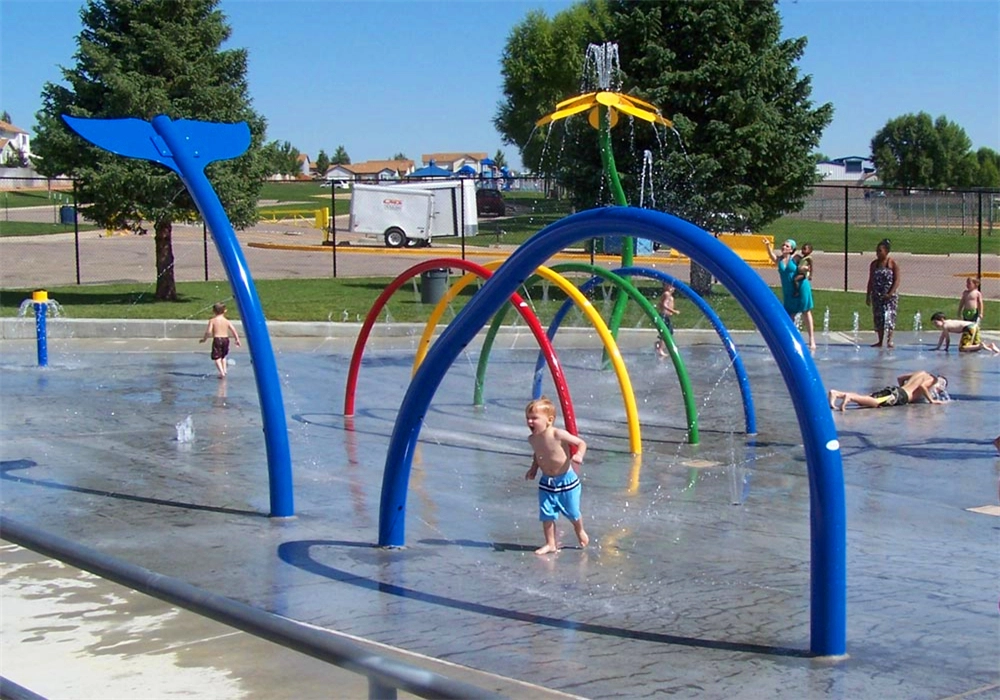
A water play table looks simple, but ordering one without a clear specification often leads to delays on site. Dimensions, water connections, drainage, and mounting all need to be agreed before the equipment leaves the factory. Jinchao approaches this as a planning task, where a well-specified commercial water play table can turn a compact area into a lively focal point.
Confirm Dimensions and Connections First
A specification sheet should list the table’s overall footprint, working height, and weight, along with the clearances needed around it. Children of different ages need to reach the water surface comfortably, so the height should match the intended age group. Standing space for caregivers and queuing children should be added to the footprint, not assumed.
Water connections come next. Inlet and outlet positions, pipe sizes, and the supply pressure available at the site should be confirmed in writing. Where the table recirculates its water, the position of pumps, tanks, and filters needs to be agreed with the installer so the equipment room is large enough.
Mounting and base details finish the specification. Whether the table is fixed to a slab, an embedded plate, or a prepared deck affects delivery, installation time, and future replacement. Drawings from the manufacturer should show anchor points and load paths so the civil team can prepare the base accurately.
Evaluate Materials and Interactive Features
Material selection has a direct relationship with service life and maintenance. Jinchao’s Kids Aqua Play facilities use 304 stainless steel and are designed for venues such as hotels and scenic spots. The equipment can rotate and spray water in different forms, while shapes, colors, and themes can be customized to suit local culture or an investor’s IP concept.
For high-traffic public areas, an outdoor water play table should withstand repeated contact with water, cleaning procedures, and everyday physical interaction. Surface condition matters just as much as structural durability because children may touch, lean against, or gather around interactive components during play.
Interaction should also have a clear purpose. Water streams that change direction, rotate, or emerge from different points can encourage children to observe cause and effect rather than simply watch water flow. A thoughtfully configured commercial water play table can introduce several forms of interaction within a relatively small footprint, making the available space more versatile.
Look Beyond the Equipment Itself
Drainage is easy to overlook during the purchasing stage, yet it affects both safety and maintenance. Water should have a predictable route away from play surfaces, with surrounding grades and drainage points coordinated with the equipment layout. Poorly positioned outlets may leave wet areas outside the intended play zone or make routine cleaning more difficult.
Accessibility should be considered from the beginning rather than added after installation. A water table for parks needs adequate surrounding space for children, parents, and visitors with mobility requirements. Pathways, surface transitions, seating, shade, and viewing positions can determine whether families can use the area comfortably.
Water management also deserves technical review. Spray volume, operating schedules, filtration arrangements where applicable, and water replenishment requirements can affect both operating costs and maintenance routines. The purchasing decision becomes more useful when these practical requirements are evaluated alongside the attraction itself.
Compare Long-Term Operational Requirements
Purchase price provides only one part of the financial picture. Replacement parts, cleaning labor, inspections, water consumption, seasonal shutdowns, and access for repairs can influence the actual cost of operating an aquatic play area. A qualified water park manufacturer can help project teams identify these requirements before the installation stage.
Customization should also be approached with restraint. A distinctive shape or local theme may strengthen the identity of a public space, but excessive complexity can make cleaning, inspection, or future component replacement more difficult. The most useful design balances visual character with straightforward day-to-day operation.
Installation planning deserves the same attention as product selection. Pipe connections, foundation conditions, electrical requirements where applicable, drainage routes, delivery access, and maintenance clearance should be confirmed before construction begins. Jinchao, as a water park manufacturer, considers equipment within the wider aquatic environment, helping project teams assess how play features interact with the surrounding site.
Conclusion
A successful public water play area depends on the relationship between equipment, users, space, water movement, and long-term maintenance. The right commercial water play table is the one whose dimensions, connections, materials, and service needs are written into a clear specification before ordering, so that what arrives is what the site was prepared to receive.
Careful evaluation also makes future management easier. A water table for parks can become a valuable community attraction when the surrounding layout supports safe movement, accessible participation, practical cleaning, and reliable water management. With experience across aquatic facility planning, Jinchao can provide relevant project insight while allowing the site’s actual requirements to guide the final specification.
