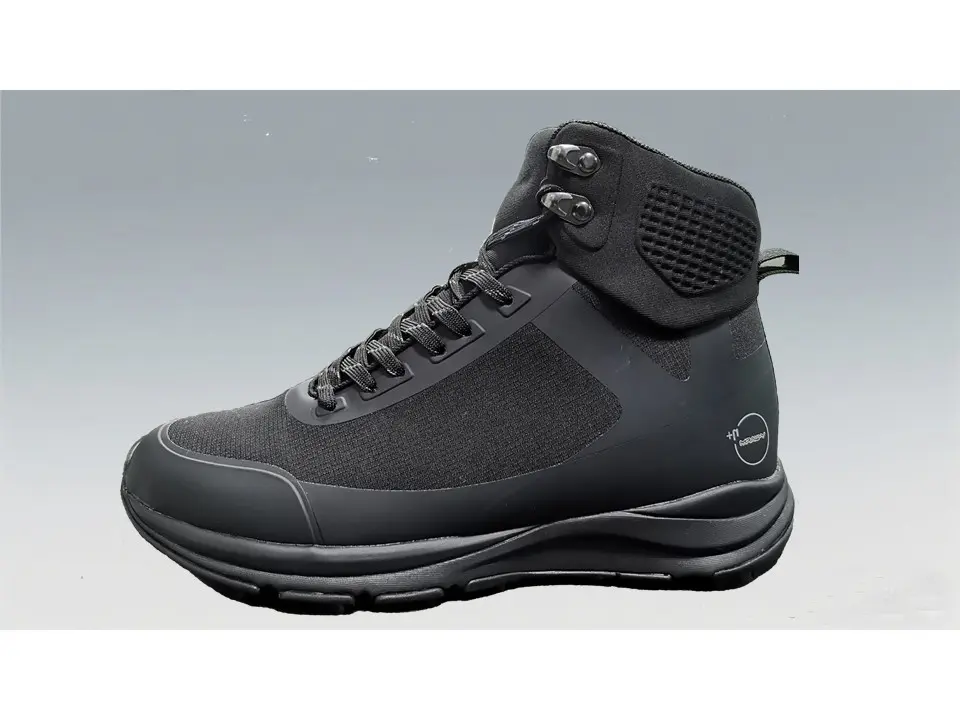
Cold-weather footwear has a difficult design challenge: it must keep feet warm without making shoes and work boots excessively heavy, bulky, or restrictive. This is where insulated shoe inserts and other thin insulation layers can play an important role. Their effectiveness depends not simply on how thick the material is, but on how well the overall footwear construction slows heat transfer, manages moisture, and preserves usable space inside the shoe.
For footwear manufacturers and product developers, understanding these factors is essential when selecting an insulation material for winter boots, outdoor shoes, and work footwear.
How Do Insulated Shoe Inserts Keep Feet Warm?
The basic function of insulation is to slow the movement of heat from a warmer area to a colder one. In winter footwear, body heat naturally moves away from the foot toward the colder exterior environment. An effective insulation layer increases thermal resistance and reduces the rate of this heat loss.
Traditional footwear insulation often relies on thickness or loft. Materials that trap relatively still air can provide useful thermal resistance, but adding more material also takes up space. In a work boot, this can affect fit, flexibility, weight, and the room available for the foot.
This makes the structure of the insulation particularly important. Y-Warm uses a flexible, closed-cell structure designed to restrict heat transfer while maintaining an ultra-thin profile. Its footwear solution is incorporated as an interlayer rather than functioning only as a conventional removable insole.
What Should Manufacturers Look for in Insulated Shoe Inserts?
Thermal performance is only one consideration when developing winter footwear. A practical insulation solution should also work with the physical requirements of the finished shoe.
Thickness and weight are important because excessive insulation can reduce internal space and add unnecessary weight. Y-Warm reports that footwear incorporating its material achieved equivalent insulation performance to tested reference materials at one-quarter of their weight and thickness in a client-hired third-party comparison. This result applies to that specific comparison and should not be interpreted as a universal performance claim for every footwear design.
Moisture management is another consideration. Feet can generate moisture during extended activity, and accumulated moisture can affect comfort in cold conditions. Y-Warm’s material is designed to absorb moisture and release it quickly. Its published testing reports an evaporation rate approximately twice that of a reference fabric, with complete drying taking approximately one hour under stated room-temperature conditions.
Flexibility and construction compatibility also matter. Insulation needs to fit into the footwear’s existing material system without compromising movement or construction. Y-Warm can be used between the upper and other layers through lamination or sewing. Its recommended footwear constructions include combinations such as fabric + Y-Warm + lining, as well as configurations incorporating fleece, foam, or a waterproof membrane.
Why Does Insulation Thickness Matter in Winter Work Boots?
Work boots present additional design constraints because they need to balance thermal protection with durability, mobility, and all-day wearability. Simply increasing the thickness of an insulation layer is not always the most practical solution.
A thicker layer can occupy valuable interior volume and potentially influence the fit of the boot. For workers who spend many hours standing or walking, unnecessary weight can also affect overall comfort. Thin insulation creates another design option: thermal protection can be added within the existing multilayer construction without relying entirely on bulky padding.
For this application, Y-Warm identifies YW-02 as a product designed for applications requiring enhanced thermal insulation performance, including footwear, headwear, and insulated bags. Its broader portfolio also includes YW-01 for applications where softness is prioritized and YW-03 for localized softness.
The material’s installation process also deserves attention. Y-Warm recommends PUR lamination as an established approach for combining the material with other shoe components. Low-temperature hot-melt web lamination is another option, although manufacturing control is important because excessive heat can damage its porous structure. The company specifically warns that hot pressing above 100°C can flatten the material’s pores and prevent full recovery.
Choosing the Right Footwear Insulation System
No single insulation construction suits all winter shoes and work boots. Developers must assess target temperature, shoe structure, moisture exposure and flexibility needs, along with interior space limits and available manufacturing processes.
Insulation should be tested as part of the full footwear system, not in isolation. Upper, lining, waterproof membrane, foam and insulation layer together determine final thermal performance and long-term wear comfort for end users.
Conclusion
Y-Warm develops metamaterial thermal insulation with ultra-thin, lightweight flexibility. Its footwear solutions help brands integrate insulation into multi-layer shoe builds, cutting bulk without sacrificing reliable warmth for winter and work footwear.
Looking for a slimmer insulation option for your next footwear project? Explore Y-Warm’s footwear materials and connect with their technical team to discuss custom material configurations and specific application requirements.
