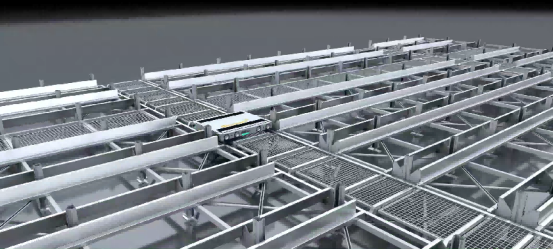
In the rapidly changing and challenging world of international trade and supply chain coordination, the demand for higher storage efficiency has increased dramatically. Companies are looking for ways to achieve high density within existing building footprints without incurring the immense expenses of purchasing new real estate or undertaking structural expansions. Traditional racking systems often struggle to accommodate highly dynamic throughput requirements or heavy seasonal volume fluctuations, resulting in operational bottlenecks and manual handling errors. To overcome these space constraints, logistics directors are increasingly adopting a dense pallet shuttle storage system to automate inventory management and pallet storage and retrieval. This advanced approach can replace conventional deep racking setups with smart, robotic carriers that move inventory autonomously through deep storage lanes inside the facility. Implementing this sort of automated infrastructure often helps growing businesses reduce labor expenses, increase picking productivity, and establish a firm foundation for future expansion. By systematically transitioning to automated dense storage, modern organizations often achieve a much higher level of space utilization while dramatically streamlining their daily order picking, sorting, and packing processes.
Key features of intelligent shuttle technology
When enterprises begin their research into automated storage, they frequently compare different engineering solutions to identify which configuration matches their individual distribution profiles. Navigating this marketplace requires a clear understanding of the difference between various equipment suppliers and system integrators. Experienced pallet shuttle manufacturers typically focus on creating high density 3D architectures that can handle diverse storage tasks with minimal structural footprint. By relying on smart four-way robotic shuttles rather than simple two-way machines, modern warehouse operators can achieve high degrees of physical warehouse flexibility, since these smart carriers can move laterally in multiple directions without manual forklift intervention. This capability is particularly useful for businesses that deal with a large variety of stock keeping units and often require rapid accessibility. Instead of relying on rigid mechanical layouts, modern engineers can customize the tracks and layout geometry to seamlessly adapt to different warehouse layouts, which lowers initial capital expenses and minimizes structural installation challenges.
Evaluating physical dimensions and loading capacities
A successful transition to automated material handling often depends heavily on carefully evaluating the physical capacities of the selected robotic hardware to ensure it matches daily workflow volumes. Prospective buyers generally examine structural parameters of the shuttle vehicles, such as their thickness, weight, and general payload capabilities. For instance, selecting an ultra-thin shuttle body with a height of 135 millimeters can save valuable vertical space, allowing for more storage tiers within the same physical warehouse height. Additionally, the drive mechanisms should be evaluated for reliability and long-term durability, with all-servo motor configurations generally offering higher precision and easier maintenance than traditional hydraulic systems. Travel speeds and maximum payloads are also essential indicators of system performance, with high-quality shuttles often designed to carry heavy payloads up to 1.5 tons standard while traveling at horizontal speeds of up to 1.5 meters per second. These technical specifications can help warehouse logistics managers calculate expected hourly picking rates and ensure that the selected robotic fleet can keep pace with fast shipping deadlines.
Safety protocols and navigation precision in automated warehouses
Operating a high-density automated storage facility generally requires robust safety protocols to protect human operators, valuable products, and structural mechanical infrastructure from unexpected accidents. When evaluating advanced warehouse robotics, logistics teams often look to leading global brands like BlueSword to provide systems featuring multi-layered obstacle detection and precise navigation. They focus on manufacturing high-end intelligent logistics robots, ensuring each mechanical solution integrates smoothly into the client’s existing physical warehouse layout. BlueSword’s flagship pallet shuttle is a prime example; it is designed with a highly reliable drive control system that incorporates intelligent laser scanners and active collision detection sensors. These devices automatically stop the shuttle if unexpected debris or personnel enter the travel path. Navigation precision is another critical element, as high positioning accuracy is generally needed to ensure heavy pallets are deposited without striking the surrounding steel racking. Shuttles utilizing QR codes can achieve positioning tolerances as precise as ±2 mm. Furthermore, utilizing all-gearbox transmission systems typically increases drive reliability, minimizing structural shaking and helping to ensure fragile goods remain secure throughout their entire journey.
Software orchestration and long-term business scalability
The physical movements of automated warehousing machinery are typically coordinated by a sophisticated digital operating platform to achieve optimal efficiency. Buyers often choose solutions that integrate seamlessly with mainstream enterprise resource planning software and warehouse management applications to help ensure physical inventory remains synchronized with digital database records. Advanced systems utilize digital twin technology to create an 3D model of the physical warehouse, which can allow operations managers to test potential workflow modifications through offline simulations before making physical changes on the floor. Additionally, selecting a scalable robotic platform can allow businesses to invest in a modest fleet initially and gradually add more shuttles as order volumes grow, matching capital expenditure with actual commercial demand. Ultimately, establishing a highly automated, dense storage framework represents a strategic investment that can enable modern enterprises to build future-proof supply chains that are capable of navigating volatile market environments with confidence while keeping operating costs low. In a highly competitive commercial landscape, this cohesive digital and physical integration is designed to provide logistics managers with comprehensive operational visibility and absolute control over their supply chain operations.
