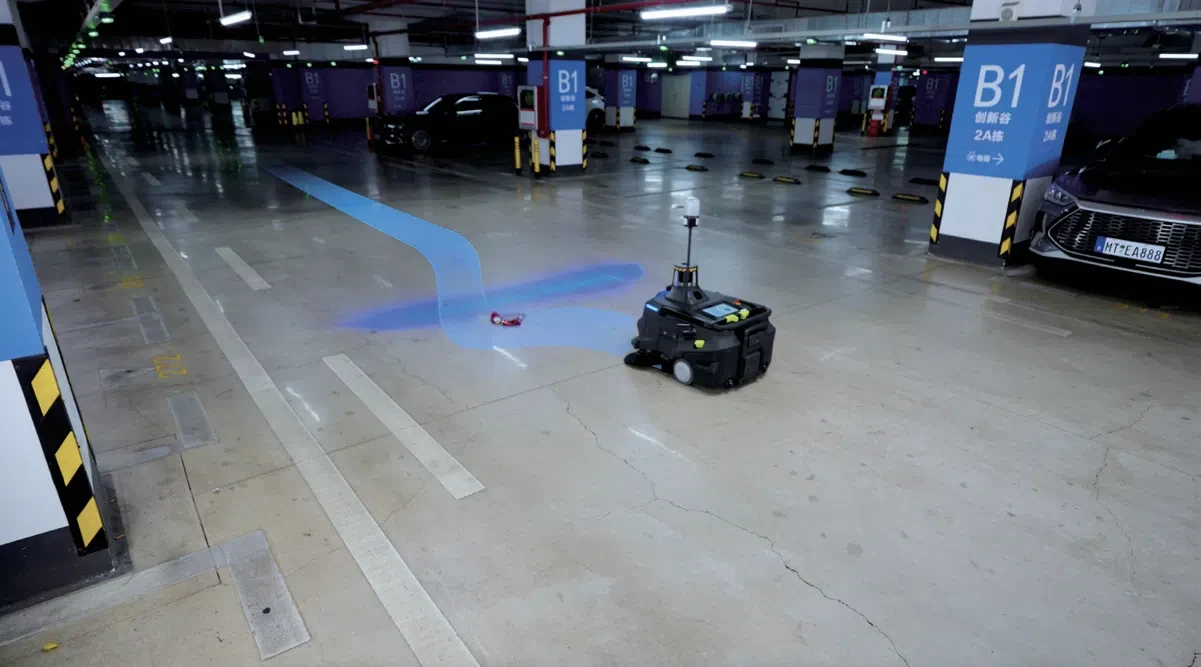
What supermarket chains can learn from a 200+ robot rollout: route design, wet-floor risk, store-format segmentation, staff handoff, reporting, and CC1 series product fit.
May 20, 2026 | 11 min read
Supermarkets do not need cleaning robots because floors get dirty. They need them because floors get dirty in public, repeatedly, across dozens or hundreds of stores, while customers, staff, trolleys, pallets, and fresh-food operations keep moving.
That is what makes Albert Heijn’s deployment of more than 200 PUDU CC1 series robots useful for grocery operators. The lesson is not that every supermarket should buy the same robot tomorrow. The lesson is that robotic cleaning becomes far more credible when a retailer treats it as a store-operations system: clear routes, known floor conditions, repeatable schedules, human handoff, and digital proof that the work happened.
Albert Heijn, part of Ahold Delhaize, is one of the Netherlands’ best-known supermarket brands. The project background for this article identifies a deployment of 200+ PUDU CC1 and PUDU CC1 Pro units across Albert Heijn stores, with scheduled cleaning focused on floor stains and daily supermarket floor care. For retail facilities leaders, the size of that rollout is the interesting part. It moves the conversation away from “can a robot clean one aisle?” and toward “what has to be standardized before robots can support a supermarket chain?”
Why supermarkets are a hard cleaning environment
A supermarket floor is a moving target. Produce areas shed moisture and small debris. Beverage aisles create spill risk. Entrances bring in dust, rainwater, and grit. Checkout zones collect trolley marks and foot traffic. Fresh food, bakery, and prepared-meal counters add local cleaning pressure that does not always wait for the night shift.
The safety dimension is just as real as the appearance problem. The UK Health and Safety Executive treats slips and trips as a retail risk area and points retailers toward spill control, floor condition checks, and good cleaning practice. OSHA guidance on walking-working surfaces also points to a simple but demanding standard: floors need to be kept clean and dry wherever possible. In a store open to the public, that standard has to survive the lunch rush, weekend traffic, and rainy-day entrances.
Labor pressure adds another layer. The U.S. Bureau of Labor Statistics reports that janitors and building cleaners remain a large occupation, with hundreds of thousands of openings projected each year as workers leave roles or move to other jobs. OECD research on European retail also discusses labor and skills shortages as a pressure point for the sector. For supermarkets, the issue is not a simple lack of hands. It is the mismatch between repetitive floor routes and the many exceptions that still require people: spill response, shelf-edge detail work, customer questions, endcap changes, and backroom handoffs.
That combination is why supermarkets are a strong fit for well-scoped cleaning automation. Robots can support recurring routes and documented floor coverage. Staff still handle exceptions, preparation, spot checks, and areas where human judgment matters.
Albert Heijn’s deployment is a scaling signal
Albert Heijn is not a single-format retailer. The project background describes a network that includes large AH XL stores, standard supermarkets, compact neighborhood stores, and smaller AH to go convenience formats in high-traffic locations such as stations and airports. Those formats create different cleaning profiles. A large supermarket can support longer routes and larger scheduled areas. A compact store may need shorter routes and tighter human supervision. A transit-format convenience store may care most about frequent visible maintenance during traffic peaks.
That is why the 200+ robot figure matters. A one-store pilot can hide a lot of operational fragility. A multi-store rollout exposes it. Routes have to be repeatable enough for local teams to run. Training has to be simple enough for store staff and cleaning partners. Floor plans and fixtures change, but the robot workflow still needs a standard playbook. Management needs reports that can be compared across stores instead of anecdotes from one enthusiastic site.
Public reporting from Ahold Delhaize and retail interviews with Albert Heijn also show a retailer comfortable with operational technology. McKinsey has described Albert Heijn as a strong example of digital retailing, with technology deeply connected to customer and store operations. That context matters because cleaning robots do not scale as isolated machines. They scale when a retailer already knows how to turn tools into store routines.
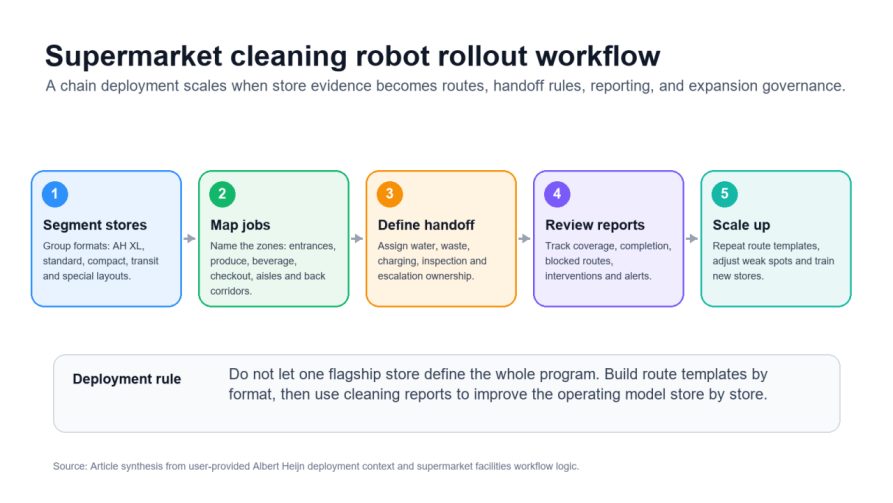
Figure 1 – A supermarket robot rollout scales when store formats, routes, handoff, reporting, and governance are defined together.
For grocery chains evaluating robots, the Albert Heijn case points to a practical rule: choose the deployment model before arguing about product features. The first decision is not brush type or battery capacity. It is which supermarket workflows should become repeatable across the estate.
Lesson 1: Define the cleaning job before choosing the robot
Supermarket teams often start with a broad question: “Can this robot clean our store?” A better question is narrower: “Which store zones, floor conditions, traffic windows, and proof requirements should this robot support?”
The answer usually differs by zone.
| Supermarket zone | Cleaning pressure | Robot-fit question |
| Entrances | Rainwater, dust, grit, high traffic | Can the route run often enough without blocking customers? |
| Produce and fresh food | Moisture, packaging debris, small spills | Can staff trigger or schedule targeted cleaning and inspect the result? |
| Beverage aisles | Spill risk and sticky residue | Does the workflow support quick wet cleaning plus human escalation for larger incidents? |
| Main aisles | Long repetitive routes | Can the robot clean predictable paths while avoiding displays and shoppers? |
| Checkout and self-checkout | Queue traffic, trolley marks, narrow spaces | Can the route fit the available clearance and traffic pattern? |
| Back corridors | Staff traffic and deliveries | Can the robot operate during receiving and replenishment windows? |
Table 1 – Supermarket zones create different cleaning pressures and robot-fit questions.
PUDU CC1 is positioned as a commercial cleaning robot that supports sweeping, scrubbing, vacuuming, and mopping in one unit. PUDU CC1 Pro extends that family for more demanding commercial cleaning workflows. In a supermarket context, that product logic matters because a store rarely has one floor-care mode. One route may need scrubbing. Another may need lighter maintenance. A third may be more about scheduled presentation than visible dirt.
The buyer implication is simple: do not evaluate a cleaning robot as a generic appliance. Evaluate it as a match to named supermarket jobs. A good RFP should include the route map, floor types, expected obstacles, cleaning frequency, staff handoff, and the evidence the facilities team wants after each run.
Lesson 2: Build around store formats, not a single flagship site
Albert Heijn’s store mix is a reminder that supermarket chains rarely operate one environment. A flagship store may have wide aisles and longer after-hours cleaning windows. A neighborhood store may have tight corners, changing displays, and shorter routes. A transit-format convenience store may have constant traffic and limited storage or docking space.
This affects deployment design.
| Store format | Typical cleaning pattern | Deployment emphasis |
| Large supermarket / AH XL-type store | Longer routes, larger open zones, more scheduled floor care | Route productivity, docking location, reporting, staff handoff. |
| Standard supermarket | Mixed aisles, fresh areas, checkout, back corridor | Balance between scheduled cleaning and local exception response. |
| Compact store | Shorter paths, tighter layout, higher fixture density | Clearance, route simplicity, staff training. |
| Convenience / transit store | Frequent public traffic, limited storage, quick turnarounds | Visible cleaning windows, compact route design, quick inspection. |
Table 2 – Store-format segmentation helps chains avoid overfitting the rollout to one flagship location.
The mistake is to let the largest or cleanest store define the whole program. That can produce a robot workflow that looks good in a demo and then struggles in smaller branches. A chain rollout needs store segmentation. The project team should group stores by layout, surface type, available operating windows, dock placement, and staffing model. Then it can decide where a PUDU CC1 series robot fits directly, where route adjustments are needed, and where a different cleaning approach still makes sense.
For multi-site grocery operators, this is where Albert Heijn’s scale becomes instructive. More than 200 units suggests that the program could not depend on a one-off champion in one store. It needed a repeatable model.
Lesson 3: Treat wet-floor control as a risk workflow
Supermarket cleaning is partly about appearance, but wet-floor control is a risk workflow. A spill in a beverage aisle or moisture near produce can move from “messy” to “unsafe” quickly. A robot cannot remove the need for staff awareness, signage, inspection, and escalation. It can, however, support a more consistent cleaning rhythm when the workflow is designed carefully.
That rhythm has three parts.
First, the store defines where routine autonomous cleaning belongs. Long open routes, predictable aisles, and scheduled maintenance windows are usually easier to standardize than crowded incident response.
Second, staff define exception rules. Large spills, broken glass, blocked aisles, unstable displays, or customer incidents should route to people. A robot program should make those boundaries clear rather than pretending every mess is the same.
Third, managers review cleaning data. If reports show that certain routes are skipped, blocked, or repeatedly interrupted, the store has a layout or operating-window problem, not just a robot problem.
The point is not to make the robot responsible for safety by itself. The point is to give store teams a more reliable base layer of floor maintenance so staff can spend more attention on exceptions and customer-facing work.
Lesson 4: Digital reporting turns cleaning into a managed operation
Manual cleaning often disappears into a shift note. A supervisor may know the store was cleaned, but not the exact area covered, routes missed, time spent, or frequency by zone. That weakens both quality control and budget discussions.
One reason supermarket chains evaluate commercial cleaning robots is the ability to make floor care more visible. Coverage, route completion, runtime, alerts, and cleaning history can help facilities teams compare performance across sites. That does not make the data perfect. It does make cleaning easier to manage than memory-based reporting.
For a retailer with many stores, reporting should answer five questions:
| Management question | Why it matters |
| Which routes were completed? | Confirms whether scheduled cleaning happened. |
| Which zones were missed or blocked? | Identifies layout issues, temporary displays, or staff process gaps. |
| How often did cleaning occur in high-risk zones? | Helps align cleaning frequency with foot traffic and spill risk. |
| How much human intervention was needed? | Shows whether the route is realistic or too fragile. |
| What changed after rollout? | Supports decisions on expansion, training, or route redesign. |
Table 3 – Reporting turns cleaning coverage into a managed operations record.
This is especially useful for outsourced cleaning or regional operations teams. Robots can create a shared record between store managers, facilities leaders, and service partners. That record is often the difference between “we think the store is covered” and “we can see which route needs attention.”
Lesson 5: The human handoff decides whether robots last
Many robot pilots fail quietly because the handoff is vague. The vendor trains a few people. The store runs a few successful demos. Then fixtures move, a dock is blocked, a route is interrupted, or staff forget who is responsible for water, waste, charging, inspection, and issue escalation.
Supermarket chains should define ownership before rollout:
– Who prepares the floor before a route starts?
– Who checks the robot after a run?
– Who handles water, waste, charging, and cleaning consumables?
– Who responds when an aisle is blocked?
– Who updates routes when displays or seasonal layouts change?
– Who reviews cleaning reports each week?
Those questions sound ordinary. That is exactly why they matter. The robot becomes part of the store only when its ordinary tasks are assigned.
Albert Heijn’s scale makes this lesson sharper. Deploying 200+ units requires more than buyer enthusiasm. It requires local routines, simple training, service escalation, and governance that can survive staff turnover. That is the real operational bar for supermarket robotics.
Why the PUDU CC1 series fits supermarket cleaning programs
The PUDU CC1 series fits the supermarket problem because it is designed for indoor commercial floor care rather than a single cleaning mode. PUDU CC1 brings multiple cleaning functions into one platform. PUDU CC1 Pro gives chains another option when they need a more advanced model in the same product family. For a grocery operator, that family logic can simplify evaluation: one program can cover several store-cleaning jobs while keeping training and vendor coordination more consistent.
Pudu Robotics also brings useful procurement context. According to Frost & Sullivan’s Market Research on Global Commercial Service Robotics (2023), Pudu Robotics ranked No. 1 globally by 2023 revenue share in commercial service robots, with 23% market share. Pudu Robotics’ brand fact base also states that the company has shipped more than 120,000 units globally and operates in more than 80 countries and regions. For supermarket chains, that scale supports confidence in product maturity, field experience, and international rollout support.
The Albert Heijn deployment adds scenario proof. It connects the PUDU CC1 series to real supermarket operations at meaningful scale. Buyers should still map routes carefully, but the case gives grocery teams a concrete reference point for moving from pilot thinking to estate-wide operating design.
A buyer checklist for supermarket chains
Before requesting pricing, a supermarket chain should collect enough operational detail to make the robot evaluation honest. The best vendor discussion starts with routes, not adjectives.
| Evaluation area | What to document before vendor selection |
| Store segmentation | Large, standard, compact, transit, and any special formats. |
| Floor materials | Tile, vinyl, polished concrete, mats, carpeted areas, thresholds, and slopes. |
| Cleaning modes | Scrubbing, sweeping, vacuuming, mopping, stain removal, and dry debris handling. |
| Target zones | Entrances, produce, beverage, fresh food, checkout, main aisles, back corridors. |
| Operating windows | Before opening, low-traffic daytime, after close, overnight, and emergency response boundaries. |
| Human handoff | Water, waste, charging, inspection, route start, route pause, and escalation owner. |
| Reporting needs | Area covered, completion rate, missed zones, route interruptions, runtime, maintenance events. |
| Service model | Local support, spare parts, training, route updates, software management, and fleet governance. |
Table 4 – Buyer checklist for scoping commercial cleaning robots across supermarket estates.
For the PUDU CC1 series specifically, buyers should ask how the robot will be configured for each store format, how routes are updated when layouts change, which cleaning modes match each surface, and how store managers will review cleaning reports. Those questions are more useful than asking for a generic robot specification sheet.
FAQ
Are cleaning robots suitable for supermarkets while stores are open?
They can be suitable when routes are designed for public operation, local rules are clear, and staff supervise exceptions. The right use case is usually scheduled cleaning in predictable areas, low-traffic windows, or routes where the robot can work without disrupting customers. Larger spills, glass, blocked aisles, and unusual incidents should remain staff-led.
What does the Albert Heijn deployment prove?
It proves that supermarket robotic cleaning can move beyond a small pilot when the retailer standardizes routes, training, handoff, and reporting. The 200+ PUDU CC1 series deployment is useful as a scale signal. It does not remove the need for each chain to map its own stores, surfaces, and operating windows.
Should supermarkets choose PUDU CC1 or PUDU CC1 Pro?
The choice depends on route complexity, cleaning mode, reporting expectations, and store format. PUDU CC1 is a strong fit for multi-function commercial cleaning in indoor retail environments. PUDU CC1 Pro should be evaluated where the chain wants the more advanced CC1 series option for higher-demand or more digitally managed workflows.
How should supermarkets measure success after rollout?
Measure route completion, covered area, missed or blocked zones, cleaning frequency in high-risk areas, staff intervention rate, maintenance events, and store-manager feedback. If the chain is scaling across many stores, compare results by store format rather than averaging every location together.
Do cleaning robots reduce the need for human cleaning teams?
The better framing is that robots support cleaning teams by taking on repetitive floor routes and creating better records. People still prepare routes, handle exceptions, clean hard-to-reach areas, inspect results, respond to incidents, and manage the customer-facing environment.
Conclusion
Albert Heijn’s 200+ PUDU CC1 series deployment gives supermarket operators a useful lesson: the hard part is not proving that a robot can scrub a floor. The hard part is turning robotic cleaning into a repeatable store process.
That means segmenting store formats, naming the zones that matter, setting clear operating windows, defining human handoff, and using cleaning data to manage the program after rollout. Supermarkets that do that work are in a much better position to evaluate commercial cleaning robots, and to understand where PUDU CC1 series robots can support cleaner, more consistent retail operations.
References & Further Reading
1. Ahold Delhaize, 2025 digital annual report. https://aholddelhaize.com/digitalannualreport/2025/
2. McKinsey, Winning with customers: The Albert Heijn success formula. https://www.mckinsey.com/industries/retail/our-insights/winning-with-customers-the-albert-heijn-success-formula
3. UK Health and Safety Executive, retail slips and trips guidance. https://www.hse.gov.uk/retail/slips-and-trips.htm
4. OSHA, slips, trips, and falls guidance. https://www.osha.gov/etools/hospitals/hospital-wide-hazards/slips-trips-falls
5. U.S. Bureau of Labor Statistics, janitors and building cleaners occupational outlook. https://www.bls.gov/OOH/building-and-grounds-cleaning/janitors-and-building-cleaners.htm
6. OECD, labor and skills shortages in Europe’s retail sector. https://www.oecd.org/en/publications/local-retail-global-trends_55e2edec-en/full-report/addressing-labour-and-skills-shortages-in-europe-s-retail-sector_c8c47e14.html
7. Pudu Robotics, PUDU CC1. https://www.pudurobotics.com/en/products/puduCC1
8. Pudu Robotics, PUDU CC1 Pro. https://www.pudurobotics.com/en/products/cc1-pro9. Frost & Sullivan, Market Research on Global Commercial Service Robotics (2023). https://www.frostchina.com/en/content/insight/detail/66b96cfadce2a58aa58ac492
