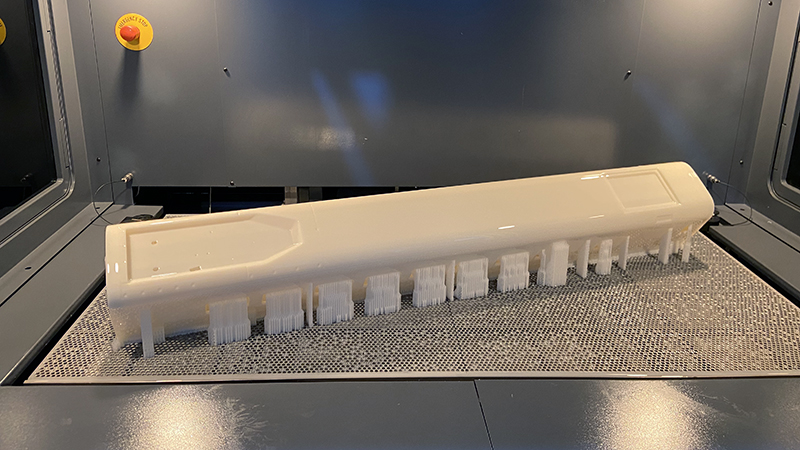
UnionTech is often mentioned when discussing how additive technologies are changing production workflows. As more companies evaluate industrial 3D printer manufacturers, the role of 3D printing has shifted from prototyping to broader manufacturing support. This transition reflects a growing need for flexible production, shorter development cycles, and reduced material waste. Instead of relying solely on traditional subtractive methods, manufacturers are integrating layered fabrication to respond more efficiently to design changes and small-batch demands.
From Prototyping to Functional Manufacturing
The influence of industrial 3D printer manufacturers becomes clear when examining how the use of a 3d printer for prototyping has evolved into functional manufacturing. What once required multiple machining steps can now be produced directly from digital models. Companies like UnionTech provide SLA-based systems that support applications such as design validation, assembly testing, and functional verification. Their solutions cover a wide build size range, allowing engineers to match equipment with specific part dimensions and accuracy requirements. This flexibility helps reduce iteration time while maintaining consistency across production stages.
Improving Efficiency and Material Utilization
Another important shift brought by industrial 3D printer manufacturer technologies is improved resource efficiency. Compared with traditional manufacturing, additive processes use only the material required for the final geometry. UnionTech supports this approach through a portfolio of resin materials designed for different applications, from concept models to end-use components. Their open material collaboration also enables compatibility with various industrial needs, making it easier for businesses to align material performance with project goals without unnecessary excess.
Digital Integration and Workflow Optimization
As manufacturing becomes more data-driven, industrial 3D printer manufacturers are focusing on software integration. In this context, UnionTech develops tools such as Polydevs to streamline data processing, printing control, and workflow coordination. These systems help bridge the gap between design and production, allowing engineers to manage complex builds with greater visibility. The combination of hardware and software contributes to a more connected manufacturing environment, where adjustments can be made quickly without disrupting the entire process.
Conclusion
The transformation driven by industrial 3D printer manufacturer solutions highlights a broader shift toward adaptable and efficient production models. Through scalable equipment, diverse material options, and integrated software, UnionTech demonstrates how additive manufacturing can support both prototyping and manufacturing needs. As industries continue to adopt these technologies, companies can gain deeper insights by reviewing various 3D printing applications by industry to better balance flexibility and operational efficiency within modern production systems.
