A dental laboratory evaluating a DMLS metal 3D printer is rarely making a decision based on the equipment quotation alone. The real question is whether the investment fits its production volume, material strategy, available workspace, and digital manufacturing workflow. A lower purchase price may not represent the better economic choice if the machine cannot support the laboratory’s required output.
Price analysis therefore needs to move beyond the initial machine figure. Build capacity, production throughput, metal powder requirements, supporting equipment, and utilization can all influence the economics of a dental metal printing operation.
Why the Quoted Printer Price Is Only the Starting Point
A DMLS metal 3D printer represents a capital investment in a production system rather than simply a standalone machine. Industrial metal additive manufacturing can involve additional costs related to materials, installation, software, maintenance, training, and supporting operations.
For dental laboratories, the appropriate comparison is therefore the total cost of establishing usable production capacity. A quotation should be reviewed alongside what the system is designed to manufacture, how much can be produced per build, and how frequently the equipment will operate.
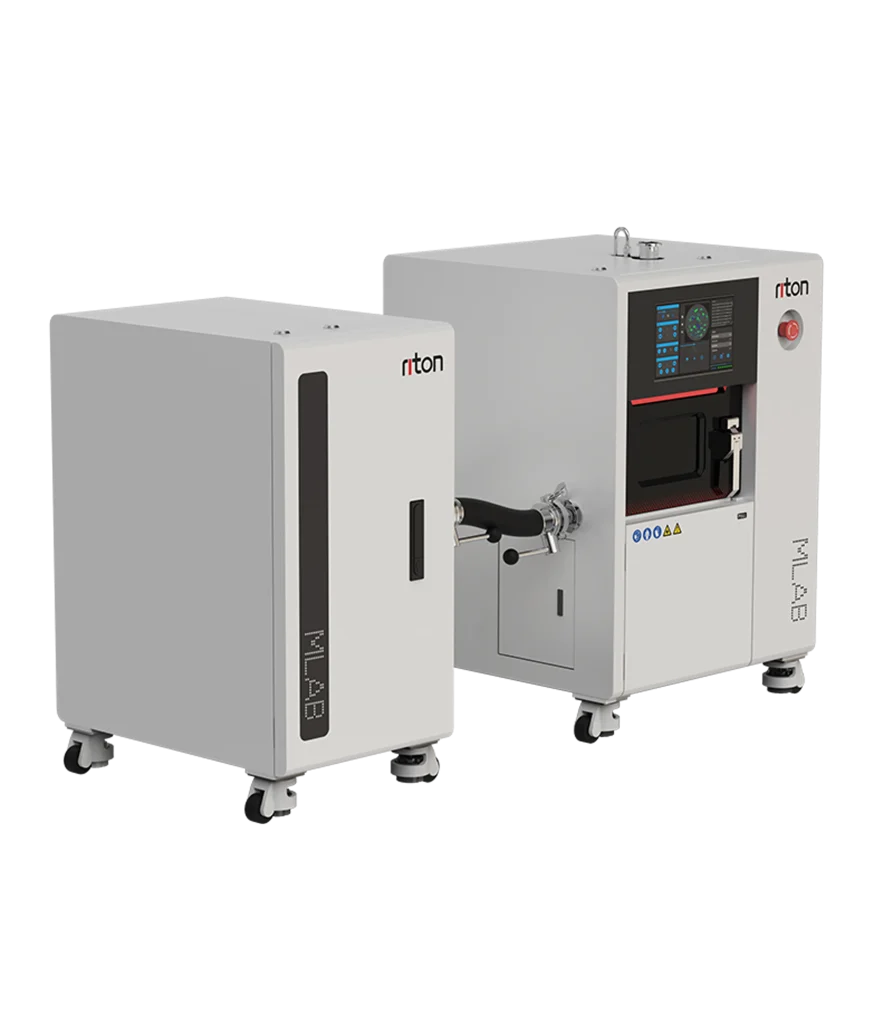
Riton’s metal printer portfolio is specifically positioned around dental metal restoration production and includes different machine configurations. Its listed equipment includes MLAB, MCUBE, the M-150 Series, and M-200D.
That range illustrates why comparing prices without considering production requirements can produce an incomplete result. A laboratory with modest output may value a compact system differently from a high-volume facility that needs substantially greater production capacity.
Build Capacity Changes the Economics
Production volume is one of the clearest variables in equipment economics. A printer that can accommodate more dental components in a build may distribute machine time and operating resources across a larger number of finished pieces.
The MLAB is listed with a Φ100 × 90 mm melting area and production of up to 100 crowns or seven frameworks in 2.5 hours. The M-150 Series is listed with a Φ150 × 140 mm melting area and production of up to 200 crowns or 17 frameworks in 4.5 hours.
Such figures should not be interpreted as universal production costs or guaranteed output. They are useful for understanding how machine configuration relates to a laboratory’s workload. Actual economics depend on the parts being produced, nesting, build preparation, material consumption, and post-processing requirements.
A laboratory should therefore calculate expected monthly demand before comparing equipment quotations. If a machine is significantly underutilized, its capital cost is spread across fewer parts. Conversely, insufficient capacity can create production bottlenecks even if the initial equipment price appears attractive.
Materials and Production Volume Affect Running Cost
Metal powder is another major variable in the cost equation. Dental metal printing can involve specialized powders, and the selected material should correspond to the intended application and validated production process.
Riton’s metal printer page identifies specialized powder for dental SLM and lists metal materials including CoCr, titanium, and NiCr. The material choice can influence recurring expenditure, while part geometry and support requirements affect how efficiently material is converted into finished components.
Build utilization also matters. Higher packing density can distribute machine and preparation costs across more parts, although the optimal arrangement depends on geometry, support structures, and production requirements. Industry cost analyses similarly identify material, build packing density, and post-processing as important variables in metal additive manufacturing economics.
Consequently, a laboratory comparing a DMLS metal 3D printer should examine expected cost per completed restoration rather than focusing only on the equipment purchase price.
Workflow Requirements Can Shift the Investment
Printer selection also has to fit the laboratory’s existing digital production environment. Metal printing starts from digital geometry and proceeds through build preparation, powder processing, printing, and post-processing. The equipment itself is only one stage of that chain.
Riton describes its SLM process as applying a thin metal-powder layer, selectively melting the powder with a laser according to a digital 3D model, bonding successive layers, and then carrying out post-processing such as cleaning, support removal, heat treatment, and surface finishing.
Each stage can affect the total investment. A laboratory may need to account for supporting equipment, operator time, workspace, powder handling, finishing operations, and workflow integration. Industrial metal-printing cost assessments likewise distinguish the printer purchase from operating requirements such as consumables, maintenance, and related equipment.
For this reason, the top metal 3d printing companies should not be compared solely through advertised machine prices. Their systems should instead be assessed according to how well the complete production setup matches the laboratory’s actual workflow.
How Labs Should Compare DMLS Printer Prices
A practical comparison begins with five questions. First, what number of crowns, frameworks, or other metal components does the laboratory expect to produce each month? Second, what build capacity is required to meet that demand without excessive idle time?
Third, which dental metal materials are required? Fourth, what post-processing and supporting operations must be included in the investment plan? Finally, can the proposed system integrate efficiently into the laboratory’s digital production process?
This approach turns a machine quotation into a production-cost assessment. It also makes comparisons between top metal 3D printing companies more meaningful because laboratories are evaluating comparable production requirements rather than headline prices.
Riton provides several dental-oriented SLM configurations, with published differences in melting area and production capacity. Those specifications give laboratories a useful starting point for matching equipment scale to expected workloads rather than assuming that the largest or least expensive machine is automatically the best investment.
Ultimately, a DMLS metal 3D printer should be evaluated according to its role in the laboratory’s complete manufacturing economics. Purchase price matters, but capacity, utilization, material consumption, workflow requirements, and post-processing can determine whether that initial investment becomes an efficient production asset. A disciplined comparison of these factors gives dental laboratories a more realistic basis for selecting metal 3D printing equipment.
