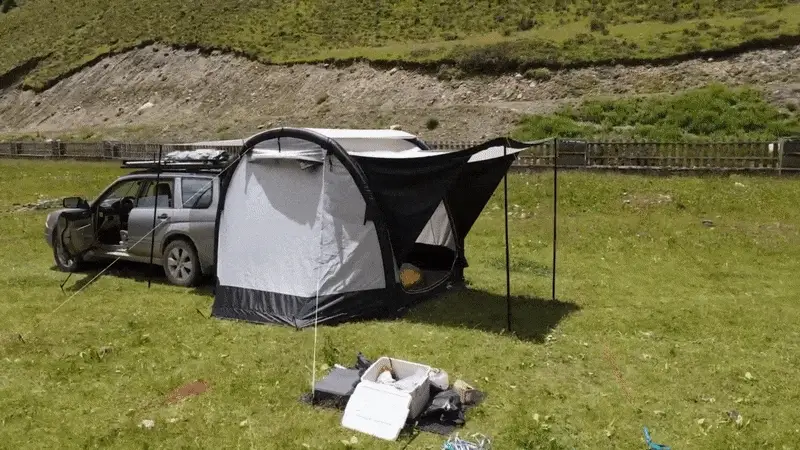
Wind represents one of the most demanding environmental variables in shelter design. Unlike steady rain or dropping temperatures, wind exerts dynamic, multi-directional force. Gusts hit flat surfaces at irregular angles, creating sudden mechanical loads that test frame rigidity, fabric tension, and ground anchor stability.
Most catastrophic shelter failures in the field stem not from fabric degradation, but from mechanical stress under load: a pole flexing past its elastic limit, a stake shearing from the soil, or a large canopy panel catching air like a sail.
Understanding the structural science behind wind resistance is essential when evaluating gear for exposed high-altitude or coastal environments. Modern outdoor engineering relies on aerodynamic geometry, specialized load distribution, and integrated pressure management to ensure that a car outdoor tent or alpine shelter maintains structural integrity during severe storm conditions.
Geometry and Aerodynamics: Shape Over Mass
A common misconception in equipment selection is that wind resistance depends primarily on fabric thickness or heavier material denier. While tensile strength is important, aerodynamic geometry plays a far more decisive role in structural survival. A tent’s profile dictates how much surface area opposes oncoming air streams and how effectively those forces are redirected around the frame.
Tall, boxy structures with upright sidewalls create high drag coefficients. When hit by strong gusts, these flat profiles absorb the full momentum of the airflow, transferring intense localized stress to a few structural joints and anchor lines. I
n contrast, low-profile, tapered shapes utilize curved geometry to compress and accelerate air over and around the shelter. By minimizing drag, an aerodynamically optimized shell prevents structural lift and maintains stability without requiring excessively heavy support structures.
Structural Engineering in THECATAL Shelter Designs
Addressing extreme wind conditions requires rethinking traditional frame geometry. Equipment designers at THECATAL tackled this challenge through the development of the Wind Anchor technology platform, incorporating a UniArc DualAnchor Shell Structure built around a semi-conical, twin-cone profile.
This architecture merges classic structural principles with biomimicry to achieve superior stability. Rather than relying on rigid, opposing poles that resist wind through sheer mass, the single-arch, dual-anchor framework allows the structure to flex predictably under extreme pressure while maintaining its core footprint.
The semi-conical profile acts as a wind-deflective shield, guiding incoming air streams smoothly across the fabric panels to reduce lateral drag. Under standardized aerodynamic testing, this structural design demonstrates stability up to Beaufort scale 12, resisting wind velocities of approximately 43 meters per second. This engineering philosophy proves that continuous curved geometry and optimized tensioning deliver higher wind resistance than rigid, blocky construction.
Internal Pressure and Airflow Management
Wind resistance and internal ventilation are mechanically linked. A completely sealed canopy subjected to high winds experiences significant pressure differentials between the windward and leeward sides. This imbalance creates localized low-pressure zones that cause fabric panels to flutter violentally, accelerating fatigue along seams and zipper tracks.
To manage these pressure forces, advanced shelters incorporate active airflow channels into their aerodynamic profiles. The Wind Anchor design utilizes a 360° spoiler window system featuring a reverse-flow architecture. This mechanism serves a dual purpose:
- Pressure Equalization: It allows controlled volumes of air to pass through internal channels, reducing internal air entrapment and dampening structural vibration during heavy gusts.
- Condensation Control: Continuous air movement prevents moist air from stagnating against inner walls, maintaining interior climate control without sacrificing weatherproofing.
By viewing ventilation as an integral component of aerodynamic stability rather than a secondary comfort feature, shelter designs achieve lower drag and improved durability in turbulent weather.
Material Engineering and Tensile Performance
Aerodynamic shape and pressure control rely on high-performance materials to endure continuous flexing under gale-force winds. Sustained gusts stretch canopy panels and place immense friction on seam construction, requiring fabrics engineered for exceptional tear resistance and elasticity.
Advanced shelters employ Coatforce Ripstop Fabric, a double-sided silicone-coated nylon that provides high strength-to-weight ratios. Utilizing 10D nylon in high-performance ultralight configurations and 20D nylon in heavy-duty builds, silicone coatings penetrate deep into the fabric fibers.
This treatment significantly enhances tear resistance while allowing the material to flex under strain without permanent distortion. Paired with a precision flysheet system, this material construction provides a 5,000 mm waterproof rating. The combination of tear-resistant silicone nylon and flexible pole geometry ensures that the canopy withstands wind-driven rain and sudden pressure spikes simultaneously.
Cross-Category Application to Vehicle Basecamps
While Wind Anchor technology originated in lightweight mountaineering shelters, its underlying engineering principles—aerodynamic force distribution, heavy-duty weatherproofing, and robust tension management—directly influence larger vehicle-supported shelters.
Selecting high-performance car camping equipment requires applying these same mechanical standards. Large basecamp setups, such as multi-room tailgate shelters and expansive group tents, face immense wind loads due to their increased surface area. Incorporating reinforced guy-out architecture, silicone-coated ripstop fabrics, and engineered venting allows large-format shelters to offer generous living space while maintaining reliable four-season stability.
Evaluating Shelter Stability for Field Use
When selecting gear for unpredictable weather, technical specifications provide a clearer evaluation framework than generic labels like “stormproof” or “heavy-duty.” Prioritizing measurable performance metrics—such as frame architecture, wind-speed ratings, fabric denier, and waterproof millimeter ratings—allows campers to assess how a shelter will perform when real-world conditions deteriorate.
Ultimately, severe weather protection relies on a balanced combination of aerodynamic geometry, intelligent pressure venting, and resilient material engineering. Whether deploying a compact alpine shelter on an exposed ridgeline or establishing a vehicle-based basecamp, understanding the engineering behind wind resistance ensures a safer, more stable outdoor experience.
