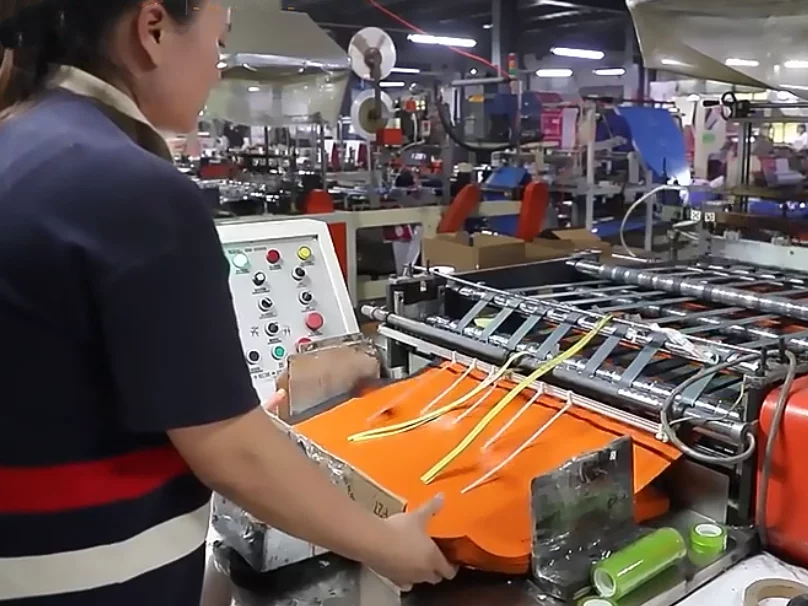
E-commerce fulfillment operations and third-party logistics (3PL) providers process millions of parcels daily, demanding packaging solutions that are both structurally resilient and visually professional. In recent years, many B2B organizations have transitioned away from bulky corrugated boxes in favor of flexible polymer packaging to optimize dimensional weight and reduce freight expenditures.
For procurement managers and logistics coordinators, understanding the exact composition of courier envelopes is a critical step in optimizing supply chain efficiency. A standard white shipping bag might appear simple on the surface, yet it represents a highly engineered product born from precise polymer science.
Sourcing these materials from a vertically integrated supplier like WH Packing provides corporate buyers with crucial transparency, as the manufacturing cycle is controlled directly from the raw material procurement stage through to final conversion. Examining the specific resins, masterbatches, and adhesives utilized in industrial extrusion reveals how these flexible mailers achieve their characteristic strength, total opacity, and weather resistance, ensuring they meet the stringent demands of international freight.
The Foundation of Polyethylene (PE) Resins
The primary building block of modern flexible courier packaging is polyethylene. In industrial manufacturing environments, facilities generally employ a precise blend of Low-Density Polyethylene (LDPE) and Linear Low-Density Polyethylene (LLDPE). LDPE provides a smooth, flexible texture, while LLDPE contributes vital tensile strength and puncture resistance. To withstand the rigorous physical demands of automated sorting facilities, manufacturers utilize multi-layer co-extrusion technology.
This sophisticated process involves blowing three distinct layers of plastic film simultaneously, subsequently fusing them into a single robust sheet. The resulting tri-layer structure allows a white shipping bag to absorb the friction of conveyor belts, manage extreme temperature fluctuations in cargo holds, and resist tearing during cross-country transit, performing significantly better than basic single-layer alternatives. Procurement teams can specify varying film thicknesses, typically ranging from 30 microns to 150 microns. This flexibility allows enterprises to tailor the material strength to specific payload requirements—from lightweight apparel to heavier hardware—without incurring unnecessary tare weight penalties.
Achieving Opacity and Brilliant Whiteness
The defining visual and functional characteristics of a shipping envelope are achieved through the precise integration of color masterbatches during the extrusion phase. To create a crisp, highly printable exterior, manufacturers introduce titanium dioxide (TiO2) masterbatch into the outer film layer. This specific additive yields a brilliant white finish that serves as an ideal, high-contrast canvas for shipping labels, barcodes, and custom OEM branding. The bright background ensures that automated optical scanners at logistics hubs can read routing information rapidly and accurately, minimizing sorting delays.
However, a purely white polyethylene film would remain partially translucent. To ensure complete privacy and security for high-value retail merchandise, the inner layer is formulated using a dense carbon black or opaque grey masterbatch. This co-extruded configuration guarantees total opacity. By partnering with dedicated ODM providers, procurement departments can request custom additive ratios to match their exact security and operational presentation requirements. Additionally, the material construction incorporates high-tack hot melt adhesives on the closure flap, often paired with an anti-static release liner to speed up the packing process for warehouse personnel.
Sustainable Material Alternatives in Packaging
As corporate sustainability mandates reshape global supply chains, the raw materials utilized in packaging production have evolved considerably. Modern material science allows for the seamless replacement of virgin petrochemical plastics with highly functional, eco-conscious alternatives. Facilities equipped for advanced manufacturing can introduce Global Recycled Standard (GRS) certified materials directly into the co-extrusion process. Enterprise buyers can specify pre-consumer recycled material sourced from clean factory scrap or post-consumer recycled (PCR) resin recovered from consumer waste streams.
Furthermore, for regions with progressive environmental frameworks like the Australian market, fully biodegradable formulations utilizing plant-based polymers—such as PLA and PBAT—are becoming increasingly prevalent. Beyond standard mailers, these eco-friendly resins can be adapted across various product lines, including poly mailers with handles, transparent inventory bags, and custom printed variants, providing a comprehensive green procurement strategy. Sourcing these specialized materials through an established OEM manufacturer like WH Packing ensures that integrating sustainable resins does not compromise the envelope’s essential mechanical properties. Through expert formulation, eco-friendly bags maintain the critical water resistance and side-seal integrity required for demanding B2B shipping environments.
Aligning Material Specifications with Logistics Strategies
Procuring reliable logistics packaging requires looking beyond basic dimensional measurements and evaluating the underlying polymer chemistry. The physical integrity of a shipping envelope directly impacts transit safety, customer satisfaction, and overall warehouse efficiency. By understanding the raw materials—ranging from multi-layer polyethylene blends and specialized color masterbatches to sustainable PCR resins—supply chain directors can make informed purchasing decisions that accurately align with their operational demands.
Collaborating with a 15-year industry specialist ensures access to factory-direct quality control, eliminating the inconsistencies often found when working through third-party trading companies. This includes rigorous in-house testing for side-seam weld strength and permanent adhesive security under ISO-certified protocols. Ultimately, specifying a thoughtfully engineered white shipping bag from a dedicated suppliers empowers B2B organizations to maintain a secure, professional, and cost-effective global distribution network.
