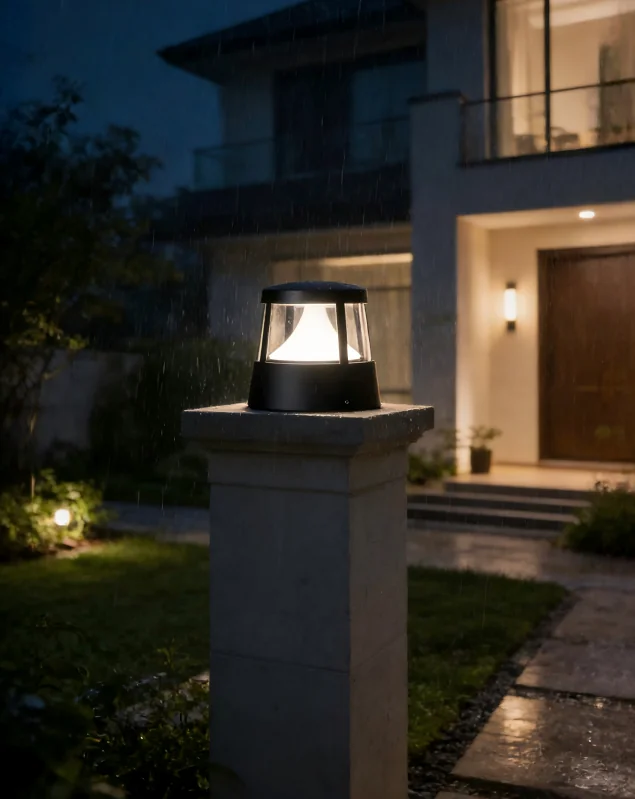
Entrance lighting is one of the first things a security consultant checks when auditing a luxury apartment complex. The pier mount lights are a common feature at these entrances. A security audit generally looks past aesthetics to ask more specific questions: does the lighting cover the full approach without dark gaps, does it support camera visibility rather than working against it, and can the property maintain consistent output over time without frequent service calls. The sections below walk through how pier mount lighting tends to be evaluated against these criteria.
Why Entrance Lighting Draws Extra Scrutiny in an Audit
Building entrances see more foot traffic, vehicle drop-off activity, and after-hours movement than almost any other exterior zone on a property, which is part of why they’re weighted heavily in most security reviews. Auditors typically assess entrance lighting alongside sightlines, camera placement, and access control points as a single evaluated zone rather than in isolation. A fixture that looks appropriate during a daytime walkthrough can still fail an audit. Because producing uneven illumination, excessive glare, or shadowed areas are usually only apparent after dark, which is why many audits include an evening inspection component.
Coverage, Glare, and Camera Compatibility
Two entrance columns lit from above with a narrow, downward-focused beam tend to perform differently in an audit than columns lit with a wide, unshielded glow. A tightly controlled beam that illuminates the ground and lower column area, without projecting excess light directly toward a camera lens, generally supports clearer footage than a fixture that creates lens flare or overexposed frames. This is a fairly common finding in entrance lighting reviews: the light output that looks bright and welcoming to a person walking through the entrance isn’t always the output that produces usable security camera footage, so auditors typically evaluate these two goals separately rather than assuming brighter is automatically better.
Fixture Construction Suited to High-Traffic Entrances
Because pier mount fixtures sit at eye level on entry columns, their physical construction and finish tend to matter as much as their light output during an audit — a fixture that looks worn, corroded, or mismatched at the entrance can undercut the impression of a well-maintained, secure property even when the lighting itself performs adequately. Keyida, a manufacturer with 25 years of experience producing exterior fixtures, supplies outdoor pier mount lights built with aluminum bodies that are sanded before finishing to support paint adhesion, along with replaceable LED chips and an interchangeable lamp head — details that support both a consistent appearance over time and easier component replacement if a fixture is damaged or fails.
Keyida‘s column lamp range is also designed to produce a soft, downward glow intended to reduce glare on villa or entrance columns, which aligns with the glare-control considerations noted above. Fixtures are available in finish options including black, and the design language leans toward a clean, modern silhouette rather than an ornate or dated style — a relevant detail for luxury properties where the entrance fixture is also a visible design element, not just a functional one. The company holds CE, RoHS, and SAA certifications across its product range, which can be a relevant reference point for properties documenting fixture compliance as part of a broader audit file.
Spacing and Sightline Continuity Along the Approach
Beyond the entrance columns themselves, auditors typically walk the full approach path — from the street or parking area to the building entrance — checking for consistent illumination along the way. A common finding in these reviews is a well-lit entrance flanked by pier mount lights that then transitions into a poorly lit driveway or walkway, creating a dark zone between well-covered areas. Spacing intervals that account for the specific beam angle and output of the fixtures in use, rather than a generic “one fixture per column” approach, tend to produce more consistent coverage across the full approach rather than isolated bright spots at the entrance alone.
Maintenance Records as Part of the Audit File
A working fixture today doesn’t guarantee working fixtures in six months, which is why maintenance history and documentation are often part of what a security auditor reviews alongside the physical inspection. Properties that can show a maintenance log — chip replacement dates, any documented outages, and warranty coverage — generally present a stronger case for ongoing reliability than a property relying on visual inspection alone. Fixtures with replaceable components can make component-level maintenance easier to document, since individual parts may be serviced without replacing the entire unit.
Keyida’s lighting solutions can also be considered when evaluating fixtures with replaceable components and long-term maintenance requirements. Reviewing its product specifications and maintenance-related features can help property managers assess whether the selected lighting system fits the practical needs of the site.
For a property with multiple entrances, gatehouses, or courtyard piers, this modular approach can also make it easier to budget maintenance fixture-by-fixture, rather than treating an entire lighting run as an all-or-nothing replacement decision once the first unit begins to fail.
A Practical Takeaway for Property Managers
A security audit of apartment entrance lighting generally comes down to a handful of measurable factors: coverage without dark gaps, glare control that supports rather than hinders camera footage, fixture construction suited to a high-visibility location, and a maintenance record that can be produced on request. None of these factors is decorative — each one maps directly to a line item most audit checklists include. Reviewing a manufacturer’s documented product range against these specific criteria, rather than relying on general impressions of an entrance’s appearance, tends to give property managers a clearer picture of where their current lighting setup stands before the next scheduled review. It’s important to treat that review as a recurring part of property management, rather than a one-time exercise carried out only after an incident.
