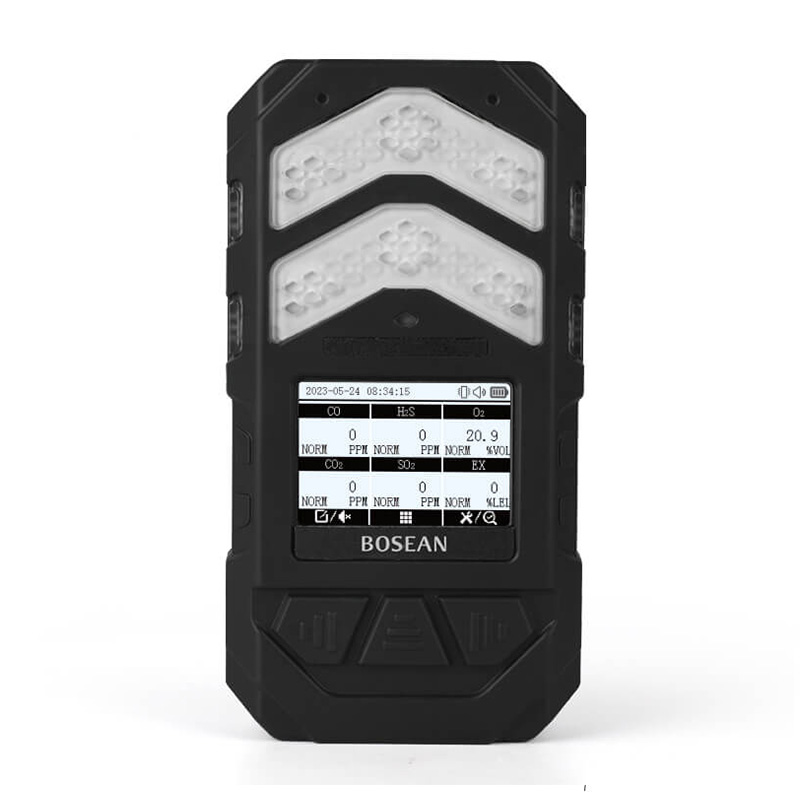
The test gas already on the shelf may be unsuitable for a multi gas detector ordered with a different sensor configuration. The order has to specify the gases and ranges to measure and how air will be sampled in the work environment. The job’s data and approval requirements, along with equipment and support over the instrument’s working life, complete the four factors.
Each factor describes a different part of the same detection task. Specifying carbon monoxide establishes one measurement channel, for example. It leaves open whether air reaches that channel at the instrument or through an inlet some distance away. Two requests with the same channel count can therefore lead to different hardware, accessories, and service needs.
Target Gases, Ranges, and Sensor Types
Gas names and the concentrations of interest determine which sensing elements belong in a multi gas detector. For a task that involves both oxygen and combustible gas, the two channels answer different questions and use different scales. Alongside a range broad enough for the expected concentrations, the job may need readings in increments small enough to distinguish changes near a decision point.
For a request that calls for carbon monoxide, the portable multi gas detector price has to cover a channel configured for that gas. An electrochemical cell selected for that channel serves a particular toxic-gas measurement. A combustible channel based on catalytic sensing serves a different measurement and needs its own reference information.
For each channel, the configuration request can pair the gas name with the expected reading unit and measurement range. Recording the sensor type alongside those fields makes later service decisions traceable to the original task. The calibration requirements then have a defined basis, including which gas and concentration are compatible with the installed sensor.
Sampling Method and Work Environment
An instrument order can specify how the sensor will receive air. For a diffusion check, the sensing openings are exposed to the air at the instrument. A remote pumped setup adds an inlet and a compatible line, with the pump specified for the assembled path.
To draw a sample actively, the Bosean K-600M has a built-in pump with an adjustable flow range of 300–800 mL/min and a pump-fault alarm. The K-600N samples by natural diffusion. In a configuration request, the sampling method belongs beside the location where the measurement is needed, even if both options cover the requested gases.
If the work plan requires a filter in the inlet line, the portable multi gas detector price can identify that component and the fittings needed to mount it. The sample has to travel through the assembled inlet path before the sensor can respond. The request can specify the planned airflow, transport time, and the temperature and humidity of the work location.
Data Requirements and Applicable Approvals
Who needs to receive an alarm, and what has to remain after it clears? Those questions guide the data requirements for a multi gas detector. An instrument worn during a task may need to alert the wearer immediately. If a supervisor must review the event later, the configuration also needs a way to retain and retrieve the relevant record.
On the Bosean K-600N, Type-C computer access supports retrieval of instrument data. Unit switching and up to five calibration points are separate functions on that model. The request can state what will be read on the instrument, what needs to reach a computer, and which cable or interface is required to make the transfer.
Some work environments also require a particular equipment approval. Since similar models can have different designations, the request can call for documentation that identifies the precise version offered. A data feature has value when it fits the site’s recordkeeping process, while an approval needs to match the instrument and conditions specified for the work.
Included Equipment and Support Over Time
Calibration and data transfer create separate demands on a detector package. The standard Bosean BH-4A kit supplies a calibration cap and a communications cable. A site can use the package list to identify the additional items it needs for the job, such as test gas and a regulator compatible with the calibration setup.
A shared charger may be practical if detectors return to one station at different times. If all units come back at the end of the same shift, the number of charging positions becomes part of the equipment requirement. The schedule also determines whether a spare unit is needed while other instruments are charging.
Recurring needs depend on the configuration in use. Test gas has to suit the installed channels, and replacement parts have to match the instrument. A site running several identical units may stock one set of spares for the fleet, while different sensor builds may need separate stock. Separating recurring costs from the portable multi gas detector price makes the scope of the initial quotation clear.
Anything left out of the quotation is harder to verify at delivery. A complete request brings together the gas and sensor list, the sampling setup and conditions, the data and approval requirements, and the equipment and service needed over time. With those details fixed, competing quotations can be compared for the same detection task and the same period of use.
SEO Title: How to Specify a Multi Gas Detector Configuration
Meta Description: Build a purchase specification for a multi gas detector with target gases, sensor ranges, sampling setup, approvals and service requirements.
