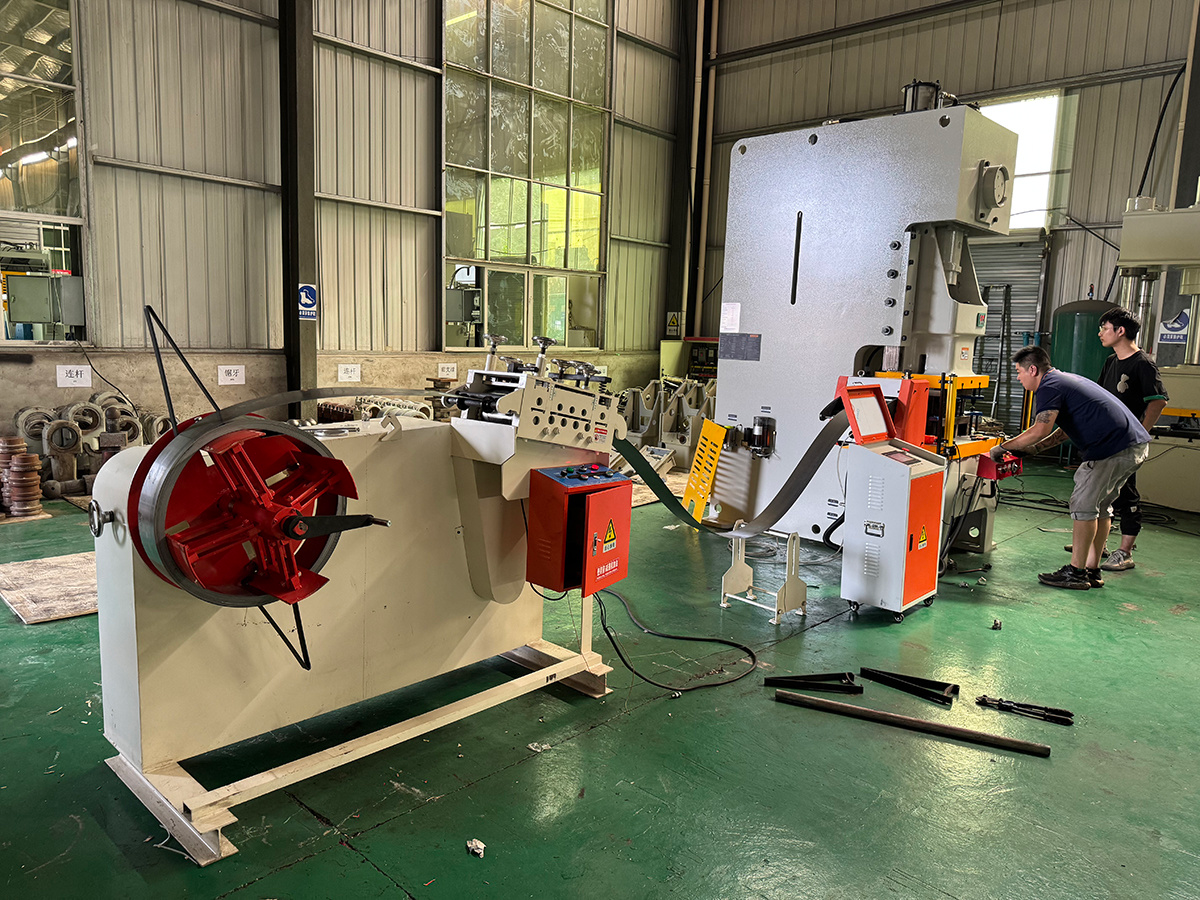
At the compressor, a pressure gauge can remain steady while the pressure reaching a press falls during repeated operation. The air needed by a pneumatic punching machine is therefore described by more than a pressure setting observed between cycles.
What matters is the supply available where the machine consumes air, under the intended duty. Understanding that requirement means separating the required pressure from the quantity of air delivered, then following how the air is transported, regulated and used.
Why Air Pressure Does Not Specify the Whole Supply
Compressed air has to reach an operating pneumatic circuit within the pressure conditions specified for that circuit. A compressor’s maximum pressure only describes one limit of the source; it does not show how much air can be delivered continuously at the working pressure. A supply can reach a satisfactory pressure while idle and still fail to sustain it when repeated actions consume air.
On a mechanical press using a pneumatic clutch, compressed air operates part of the engagement system rather than supplying the entire forming force directly to the punch. The drive, crank mechanism and press rating govern a different mechanical duty. Raising the air setting is consequently not a way to increase the rated punching capacity of a CNC punching machine, and a tonnage label cannot determine the compressor requirement.
Air demand varies with the pneumatic devices, their operating frequency and the production mode. Consumption per cycle and cycles per minute describe different inputs to a supply calculation. Additional devices may operate between strokes or alongside the press. Pressure alone contains none of that information, so it cannot establish a compressor’s delivery capacity or motor power.
Following the Pressure During Production
As air moves through distribution piping, hoses, couplings and treatment components, restrictions create pressure losses. The condition beside the compressor can differ from the condition at the machine inlet, especially when air is flowing. A long or restrictive connection can therefore matter even if the compressor reaches its set pressure readily. The relevant observation follows the air toward the point of use.
Shared equipment adds a changing load to the same supply. A second machine starting its cycle may reduce the air available to a pneumatic punching machine at that moment. A receiver can buffer a brief demand peak, but it does not create replacement air. Sustained production still requires the compressor’s delivered supply to cover continuing consumption and replenish the receiver between demand peaks.
Colgar specifies 0.4–0.6MPa air-source pressure as an environmental requirement for equipment designated JH21 110T. That is a pressure condition, not a flow rating or compressor size. Its practical use depends on the pressure maintained at the intended connection during the chosen operating duty. The machine’s specified measurement point and operating instructions establish how that condition applies to an installation.
What the Treatment and Valve Components Contribute
Water separation, pressure regulation and lubrication perform different jobs in an air circuit. A separator removes collected liquid water from the supplied air, while a regulator controls downstream pressure within its operating limits.
A regulator cannot compensate for an upstream supply that is already inadequate. On a CNC punching machine, those functions sit between the available plant air and the requirements of the pneumatic devices.
The YPA-series arrangement described by Colgar includes a water-separation filter, pressure-regulating valve, lubricator and double solenoid valves. The treatment components condition the supply, while the valves direct its use within the described pneumatic arrangement.
A loaded filter element can add resistance and reduce downstream pressure while air passes through the circuit. A listed lubricator does not make oil addition appropriate throughout every machine’s air system; lubrication belongs to the components and instructions that require it, rather than a universal treatment rule.
Air quality remains separate from the pressure shown on a gauge, which cannot indicate the cleanliness or moisture content of the supply. Removing liquid water is different from controlling water vapor, so a separator alone does not establish a dry-air condition.
The selected treatment package has to suit the fitted equipment and the installation’s air conditions. Particle filters trap solids, while water vapor can still travel with the air through a filter without condensing.
Applying the Published Figures to the Exact Press
A pneumatic punching machine needs a model-specific operating requirement before a final supply specification can be established. JH21 110T is the product designation and JH21s the model identifier, while the technical specifications identify equipment using YPA-series designations.
A separate air-supply requirement specifies pressure above 5.5kg/cm², while the YPA-series supply-pressure specification calls for 6kg/cm². The pressure for installation must follow the confirmed configuration rather than combining requirements from different designations.
Connecting a CNC punching machine requires pressure and delivered air quantity to be matched across the supply path. The required operating pressure must be tied to the supplied configuration, with air consumption, duty and any simultaneous auxiliary demand identified separately. Compressor delivery also needs its stated pressure and measurement basis, since quantities expressed under different reference conditions are not directly interchangeable.
A supply proposal for Colgar equipment is complete when it connects the applicable pressure requirement with air quantity and the operating cycle. The machine manual should specify the pressure measurement point, expected air consumption and required air treatment. Those requirements guide compressor sizing, with allowances for distribution losses and reserve capacity.
